
TPO vs. EPDM Roofing: Which Is Better for Your Commercial Building?
If you ask whether TPO or EPDM is the better commercial roofing membrane, the honest answer is: better for what building?
Both materials can be part of a durable low-slope roofing system. Neither one automatically fixes poor drainage, wet insulation, a damaged roof deck, weak flashing details, or a roof that was designed without considering regular HVAC traffic. If somebody gives you a one-word answer without looking at the building, they are skipping half the roof.
For commercial properties in Lancaster, York, Harrisburg, Lebanon, Reading, Carlisle, and the surrounding region, the useful comparison is not TPO versus EPDM on a brochure. It is one complete roof assembly versus another, designed for the building, the local climate, the way the roof is used, and the warranty the owner actually wants.
The Short Answer
TPO is a reinforced thermoplastic membrane whose field seams are joined with hot-air welding. It is commonly selected in a light, reflective color and is available in several attachment methods and thicknesses.
EPDM is a synthetic rubber membrane with a long commercial-roofing history. Depending on the product and assembly, it may be fully adhered, mechanically attached, or ballasted. EPDM is available in black, white, and other manufacturer-specific colors, and its seams typically use compatible primer and tape systems.
Neither description produces a universal winner. The better choice depends on:
The condition and type of the roof deck
Whether the existing roof can be recovered or must be removed
Insulation, cover board, and drainage design
The number of penetrations and rooftop units
Expected foot traffic and service access
Building energy goals
Attachment and wind-uplift requirements
Installation conditions and project schedule
The exact manufacturer-backed system and warranty
That is why Joyland evaluates the full commercial flat roofing system, not just the top sheet.
What Are TPO and EPDM?
TPO Roofing
TPO stands for thermoplastic polyolefin. It is normally supplied as a reinforced single-ply sheet. Adjacent sheets and many flashing details are joined with hot-air welding.
Official Versico TPO product information shows that TPO systems are available in multiple colors, thicknesses, and attachment methods, including mechanically fastened, adhered, and induction-welded assemblies. Those options matter because the membrane name alone does not tell you how the roof will be secured or what is below it.
White and other light-colored TPO membranes are commonly chosen when solar reflectance is part of the building's energy strategy. That can be useful, but roof color is not an energy audit. Insulation, air leakage, HVAC efficiency, building use, and local weather all affect the result.
EPDM Roofing
EPDM stands for ethylene propylene diene terpolymer. It is a synthetic rubber membrane that has been used on commercial roofs for more than 50 years. Official Versico EPDM product information lists reinforced and non-reinforced products, multiple attachment methods, and black, white, and gray options.
That last point is worth slowing down for. EPDM does not always mean a black roof, just as TPO does not always mean the same white membrane. Product color, reinforcement, thickness, attachment method, seam system, and approved accessories should all be named in the proposal.
Start With the Whole Roof System, Not the Membrane
A membrane does not float over the building by itself. The roof deck, insulation, cover board, fasteners or adhesive, flashings, perimeter metal, drains, and penetrations all affect performance.
Roof Deck and Existing Moisture
Before comparing new membranes, determine what is happening below the existing roof. A contractor should identify the deck type, look for visible deterioration, review leak history, and determine whether moisture may be trapped in the existing assembly.
If wet insulation or damaged decking is ignored, a new membrane can cover the symptom without correcting the problem. If the existing roof is dry, sound, and eligible for a recover under the applicable requirements, a recover system may reduce tear-off and disposal. That decision has to be made from the actual roof condition, not from a generic promise that every building can avoid removal.
Insulation and Cover Board
Insulation affects the building's thermal performance. A cover board can create a more durable surface above the insulation and provide additional protection from foot traffic or impact, depending on the selected product and assembly.
This is one reason membrane-only price comparisons can be misleading. A proposal with the same square footage may include a different insulation value, a different cover board, or no cover board at all. The totals are not comparable until the assembly is comparable.
Drainage and Tapered Insulation
Low-slope roofs still need positive drainage. Drains, scuppers, gutters, and tapered insulation must work together to move water off the roof.
If water regularly remains in low areas, changing from EPDM to TPO or from TPO to EPDM does not fix the geometry. The drainage plan should be addressed in the scope. Otherwise, the new membrane is being asked to babysit a pond.
Attachment and Wind Design
TPO and EPDM can both be installed in more than one type of assembly. The correct attachment method and fastening pattern depend on the roof deck, building height, perimeter conditions, wind-uplift requirements, selected manufacturer system, and warranty.
Ask whether the proposal is fully adhered, mechanically attached, induction welded, ballasted, or another approved system. Then ask why that method fits the building. "TPO roof" or "EPDM roof" is not a complete specification.
How TPO and EPDM Compare in South-Central Pennsylvania
Pennsylvania commercial roofs operate through both heating and cooling seasons. They also have to manage rain, snow, wind, summer heat, and repeated temperature changes. That makes whole-building judgment more useful than a rule borrowed from Phoenix or Miami.
Roof Color and Energy Performance
Light-colored roof membranes can reduce solar heat gain. The U.S. Environmental Protection Agency's cool-roof guidance explains that cool roofs absorb and transfer less solar heat, which can reduce air-conditioning demand. It also notes that results depend on the building and climate, and that reflective roofs can create a winter heating penalty in colder conditions.
TPO is often selected in white or another reflective color. EPDM is commonly black, but reflective EPDM products also exist. The right energy comparison should consider the exact product's published reflectance, the building's insulation, HVAC system, operating schedule, and heating-versus-cooling demand.
In other words, "white saves money" is too simple. A reflective membrane can be a smart choice, but the expected savings should be based on the building rather than a universal percentage.
Seams and Installation
TPO seams are heat welded. EPDM seams generally use manufacturer-approved primers and tape systems. Both approaches can perform well when the substrate is prepared, the compatible materials are used, and the details follow the current manufacturer specification.
Heat-welded TPO seams are not automatically perfect, and EPDM seams are not automatically more dependable. The useful questions are whether the installer is trained for the selected system, whether seams and flashings are checked during installation, and whether the completed roof must pass a manufacturer inspection for the chosen warranty.
Rooftop Traffic
HVAC technicians, maintenance crews, ladders, dropped tools, and repeated walking can damage any single-ply membrane. Do not choose a membrane by assuming one is immune to traffic.
Plan service paths around roof hatches, ladders, rooftop equipment, and other concentration points. Manufacturer guidance for products such as Mule-Hide EPDM walkway pads specifically calls for walkways at traffic concentration points and where equipment requires frequent service. Compatible walkway products and protection details should be included in the design rather than added after the roof is scarred.
Repairs and Maintenance
Both TPO and EPDM can be repaired, but the repair materials and procedures are system-specific. A TPO repair may involve cleaning and hot-air welding compatible membrane or accessories. EPDM repairs commonly use compatible cleaners, primers, tapes, and flashing products.
Do not treat a bucket of generic roof cement as a universal repair kit. Mule-Hide's own product guidance warns that conventional asphalt plastic cement should not be used with TPO, EPDM, PVC, or other single-ply membranes.
Maintenance should also include keeping drainage paths clear, checking flashings and perimeter details, documenting punctures or storm damage, and following the manufacturer warranty requirements. Versico's spring roof checkup guidance recommends checking drains, gutters, downspouts, flashings, and other details after winter.
Installation Conditions and Project Schedule
Temperature and moisture restrictions vary by product, adhesive, primer, and attachment method. Some self-adhered systems have lower installation-temperature limits than traditional field-applied adhesives. Welding settings for thermoplastic membranes must also be adjusted to actual rooftop conditions and verified in the field.
That means there is no honest universal statement that TPO is always better in cold weather or EPDM is always easier to install. The contractor should use the current technical data for the exact products in the proposal and plan the work around the manufacturer's published conditions.
What Do TPO and EPDM Roofs Cost?
Joyland's current commercial roofing pricing guide lists planning ranges of $8 to $15 per square foot for TPO replacement and $10 to $15 per square foot for EPDM replacement as of August 2026.
Those ranges overlap for a reason. The final cost is shaped by more than the membrane. Building height, access, tear-off, deck repairs, penetrations, insulation value, tapered drainage work, cover board, attachment method, perimeter details, and warranty all affect the proposal.
Use the published ranges to establish a rough budget. Use an on-roof inspection to price the actual scope. A low per-square-foot number is not a bargain if the drainage, insulation, cover board, or warranty you need is missing from it.
A Real Joyland TPO Project in Harrisburg
Joyland's commercial flat-roofing page documents a 2024 office and warehouse project in Harrisburg. The existing roof included leaking EPDM over older asphalt roofing, along with significant ponding water and damaged wood decking.
The solution was not simply "replace EPDM with TPO." Joyland removed the old roofing, replaced damaged deck areas, installed a base layer of polyiso insulation, added tapered material to improve drainage, and finished the assembly with reflective TPO. The published project details list approximately 1,200 square feet, a $22,000 project cost, and a 20-year no-dollar-limit warranty.
That project is a good example of the real decision. The membrane mattered, but the deck repairs, insulation, slope, drainage, details, and warranty were part of the roof that solved the problem.
How to Compare Commercial Roofing Warranties
The largest number on the brochure is not the whole warranty. Ask whether the proposal includes a membrane material warranty, a contractor workmanship warranty, or a manufacturer-backed total-system or no-dollar-limit warranty.
Joyland's flat-roofing page says qualifying commercial systems may be available with manufacturer no-dollar-limit warranties up to 30 years. The exact term and coverage depend on the membrane, thickness, assembly, details, installer authorization, manufacturer approval, and warranty documents selected for the project.
Versico's warranty services information also shows that available protections can vary by system and may include optional coverage for events such as puncture, hail, or higher wind speeds. Do not assume those enhancements are included unless the proposal and final warranty say so.
Before choosing, ask for:
The exact warranty name and term
Whether it is material-only or covers the approved roof system
The membrane thickness and assembly required to qualify
Wind, hail, puncture, and other optional coverage included
Manufacturer inspection requirements
Owner maintenance and documentation requirements
Exclusions, transfer rules, and claim instructions
The contractor's separate workmanship coverage
Read the actual warranty document. "Thirty years" is a length of time, not a summary of coverage.
When TPO May Be the Better Fit
TPO may be a strong option when:
A light, reflective membrane supports the building's energy or appearance goals
The selected TPO assembly fits the deck, attachment, and wind requirements
The contractor is trained and equipped to install and check heat-welded seams and details
Compatible walkways and protection can be designed around rooftop traffic
The manufacturer offers the assembly and warranty the owner wants
TPO is not automatically better because it is white, newer, or heat welded. It is better when the complete TPO system fits the building and is installed to the specified details.
When EPDM May Be the Better Fit
EPDM may be a strong option when:
The owner wants a membrane with a long record in commercial roofing
A reinforced or non-reinforced EPDM product fits the chosen attachment method
Black, white, or gray EPDM fits the building's energy and appearance goals
The roof design benefits from the available sheet sizes, accessories, and approved details
The selected EPDM system provides the desired warranty and project schedule
EPDM is not automatically better because it is older technology or made of rubber. It is better when the specified EPDM assembly solves the building's actual problems.
When Neither Membrane Is the Whole Answer
Sometimes the real question is not TPO or EPDM. A building may need major drainage correction, targeted deck replacement, wet-insulation removal, structural evaluation, or a different roof system altogether.
Modified bitumen, PVC, a coating system, or another assembly may deserve consideration depending on chemical exposure, rooftop traffic, existing materials, building use, and budget. A repair or restoration approach may also make more sense when the existing roof is still serviceable.
The inspection should determine the problem before the proposal chooses the product.
What Joyland Evaluates Before Recommending a System
Joyland's commercial roofing process begins with an on-roof evaluation supported by photos and video. For a TPO-versus-EPDM decision, the inspection should document:
Existing membrane and number of roof layers
Leak history and visible moisture concerns
Roof deck type and visible deterioration
Drain, scupper, gutter, and low-area performance
Insulation, slope, and cover-board needs
Penetrations, curbs, parapets, and perimeter details
Rooftop equipment and traffic paths
Building height, access, staging, and operating constraints
Repair, recover, or replacement options
Energy goals, ownership timeline, budget, and warranty priorities
Joyland is based in Lancaster County and serves commercial clients across central and eastern Pennsylvania, with commercial work extending beyond the core residential service area when the project is a fit. That local perspective matters because a mixed Pennsylvania climate is not the same design problem as a roof in a desert or coastal market.
Questions to Ask Before Choosing TPO or EPDM
Use the same questions for every proposal:
What exact membrane manufacturer, product, color, reinforcement, and thickness are included?
Is the system adhered, mechanically attached, induction welded, ballasted, or another approved assembly?
What insulation value and cover board are included?
How will ponding or poor drainage be corrected?
What existing materials will be removed, and what can remain?
How will wet insulation or damaged decking be identified and priced?
What walkways and protection are included around service areas?
What quality-control checks will be completed on seams, flashings, and penetrations?
Will a manufacturer representative inspect the completed roof?
What exact warranty will be issued, and what does it cover?
What owner maintenance is required after installation?
What could change the final price?
If two proposals answer those questions differently, you are not comparing the same roof.
TPO vs. EPDM FAQs
Is TPO Better Than EPDM for a Commercial Roof in Pennsylvania?
Not automatically. TPO and EPDM can both be appropriate in Pennsylvania. The better system depends on the roof deck, drainage, insulation, attachment, traffic, energy goals, schedule, installer qualifications, and warranty. An inspection is needed to compare complete assemblies for the building.
Does TPO Always Save More Energy Than EPDM?
No. A light-colored TPO membrane can reduce solar heat gain, but actual energy savings depend on climate, insulation, air leakage, HVAC efficiency, roof condition, and building use. Reflective EPDM products also exist. Compare the published properties of the exact membranes and evaluate the whole building.
Can TPO or EPDM Be Installed Over an Existing Roof?
Sometimes. A recover may be possible when the existing assembly is dry, stable, compatible, and allowed by the applicable code, manufacturer system, and project requirements. Wet insulation, damaged decking, too many existing layers, or incompatible materials may require partial or full removal.
How Long Do TPO and EPDM Roofs Last?
There is no single honest lifespan for every TPO or EPDM roof. Manufacturers offer different warranty terms based on membrane thickness, attachment, insulation, cover board, details, and inspection requirements. Actual service life also depends on drainage, installation quality, exposure, maintenance, damage, and repairs. Use the specified system and warranty as a starting point, not a promise of an exact replacement date.
Is TPO or EPDM More Resistant to Punctures?
It depends on the exact product and assembly. Reinforcement, membrane thickness, fleece backing, cover board, substrate, and walkway protection all influence puncture performance. Compare product data for the specified systems instead of making a blanket material claim.
How Often Should a Commercial Roof Be Inspected?
Follow the manufacturer warranty and maintenance requirements for the installed system. It is also wise to inspect after major storms, rooftop construction, or equipment service that may have damaged the membrane. Routine checks should include drainage, flashings, seams, penetrations, perimeter details, and traffic areas.
Get a Commercial Flat Roof Recommendation From Joyland
The goal is not to crown a membrane champion. It is to design a roof that fits the building and give the owner a scope that can be checked line by line.
If you manage a commercial building in south-central or eastern Pennsylvania, contact Joyland Roofing to schedule a commercial roof inspection and quote. Joyland can document the existing condition, explain repair, recover, and replacement options, and compare TPO, EPDM, or another appropriate system without pretending one membrane wins every time.
Pricing and source links reviewed August 2026. Published product options, warranty terms, and Joyland planning prices can change. Confirm the exact current products, assembly, coverage, and project price in the written proposal and warranty documents.
If you ask whether TPO or EPDM is the better commercial roofing membrane, the honest answer is: better for what building?
Both materials can be part of a durable low-slope roofing system. Neither one automatically fixes poor drainage, wet insulation, a damaged roof deck, weak flashing details, or a roof that was designed without considering regular HVAC traffic. If somebody gives you a one-word answer without looking at the building, they are skipping half the roof.
For commercial properties in Lancaster, York, Harrisburg, Lebanon, Reading, Carlisle, and the surrounding region, the useful comparison is not TPO versus EPDM on a brochure. It is one complete roof assembly versus another, designed for the building, the local climate, the way the roof is used, and the warranty the owner actually wants.
TPO is a reinforced thermoplastic membrane whose field seams are joined with hot-air welding. It is commonly selected in a light, reflective color and is available in several attachment methods and thicknesses.
EPDM is a synthetic rubber membrane with a long commercial-roofing history. Depending on the product and assembly, it may be fully adhered, mechanically attached, or ballasted. EPDM is available in black, white, and other manufacturer-specific colors, and its seams typically use compatible primer and tape systems.
Neither description produces a universal winner. The better choice depends on:
- The condition and type of the roof deck
- Whether the existing roof can be recovered or must be removed
- Insulation, cover board, and drainage design
- The number of penetrations and rooftop units
- Expected foot traffic and service access
- Building energy goals
- Attachment and wind-uplift requirements
- Installation conditions and project schedule
- The exact manufacturer-backed system and warranty
That is why Joyland evaluates the full commercial flat roofing system, not just the top sheet.
What Are TPO and EPDM?
TPO Roofing
TPO stands for thermoplastic polyolefin. It is normally supplied as a reinforced single-ply sheet. Adjacent sheets and many flashing details are joined with hot-air welding.
Official Versico TPO product information shows that TPO systems are available in multiple colors, thicknesses, and attachment methods, including mechanically fastened, adhered, and induction-welded assemblies. Those options matter because the membrane name alone does not tell you how the roof will be secured or what is below it.
White and other light-colored TPO membranes are commonly chosen when solar reflectance is part of the building's energy strategy. That can be useful, but roof color is not an energy audit. Insulation, air leakage, HVAC efficiency, building use, and local weather all affect the result.
EPDM Roofing
EPDM stands for ethylene propylene diene terpolymer. It is a synthetic rubber membrane that has been used on commercial roofs for more than 50 years. Official Versico EPDM product information lists reinforced and non-reinforced products, multiple attachment methods, and black, white, and gray options.
That last point is worth slowing down for. EPDM does not always mean a black roof, just as TPO does not always mean the same white membrane. Product color, reinforcement, thickness, attachment method, seam system, and approved accessories should all be named in the proposal.
The Short Answer
TPO is a reinforced thermoplastic membrane whose field seams are joined with hot-air welding. It is commonly selected in a light, reflective color and is available in several attachment methods and thicknesses.
EPDM is a synthetic rubber membrane with a long commercial-roofing history. Depending on the product and assembly, it may be fully adhered, mechanically attached, or ballasted. EPDM is available in black, white, and other manufacturer-specific colors, and its seams typically use compatible primer and tape systems.
Neither description produces a universal winner. The better choice depends on:
- The condition and type of the roof deck
- Whether the existing roof can be recovered or must be removed
- Insulation, cover board, and drainage design
- The number of penetrations and rooftop units
- Expected foot traffic and service access
- Building energy goals
- Attachment and wind-uplift requirements
- Installation conditions and project schedule
- The exact manufacturer-backed system and warranty
That is why Joyland evaluates the full commercial flat roofing system, not just the top sheet.
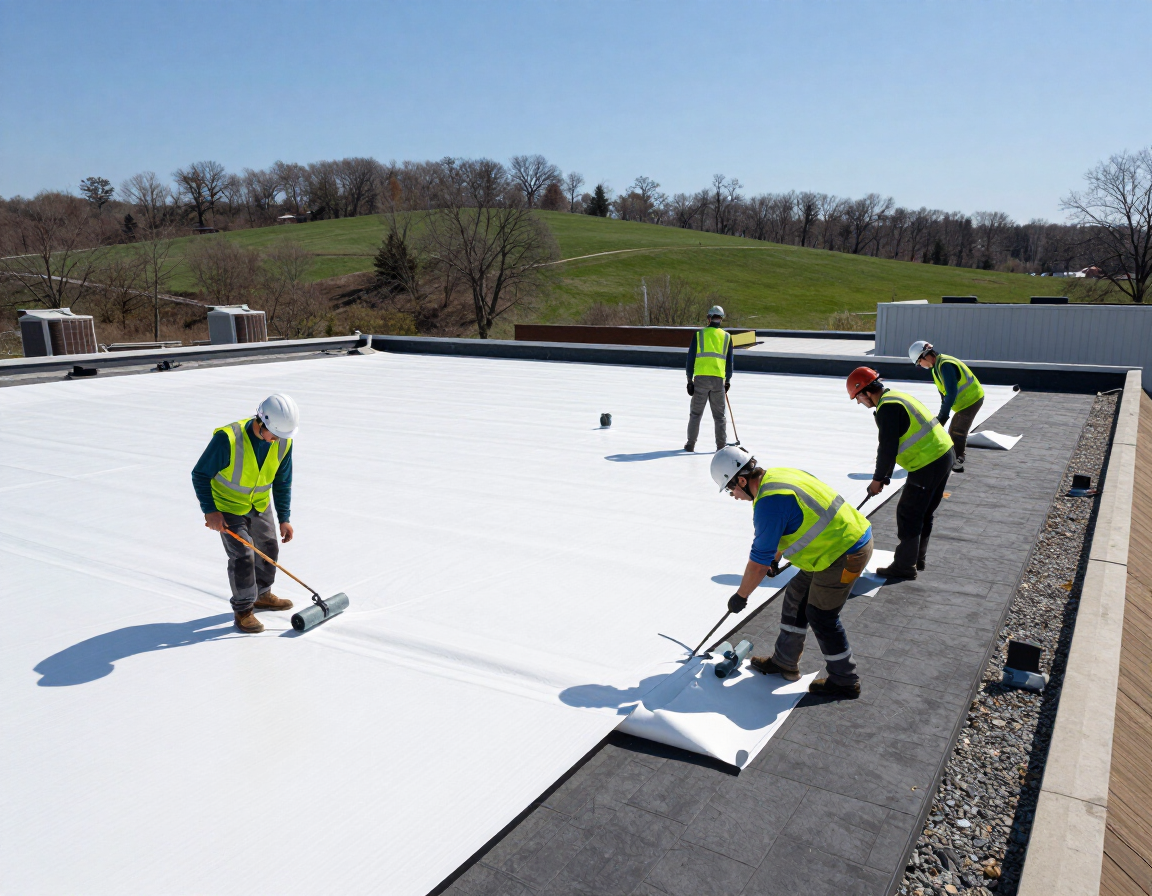
The Whole Roof System Matters
A membrane does not float over the building by itself. The roof deck, insulation, cover board, fasteners or adhesive, flashings, perimeter metal, drains, and penetrations all affect performance.
Choosing between TPO and EPDM starts with understanding the complete assembly each system requires for the building.
Start With the Whole Roof System, Not the Membrane
A membrane does not float over the building by itself. The roof deck, insulation, cover board, fasteners or adhesive, flashings, perimeter metal, drains, and penetrations all affect performance.
Roof Deck and Existing Moisture
Before comparing new membranes, determine what is happening below the existing roof. A contractor should identify the deck type, look for visible deterioration, review leak history, and determine whether moisture may be trapped in the existing assembly.
If wet insulation or damaged decking is ignored, a new membrane can cover the symptom without correcting the problem. If the existing roof is dry, sound, and eligible for a recover under the applicable requirements, a recover system may reduce tear-off and disposal. That decision has to be made from the actual roof condition, not from a generic promise that every building can avoid removal.
Insulation and Cover Board
Insulation affects the building's thermal performance. A cover board can create a more durable surface above the insulation and provide additional protection from foot traffic or impact, depending on the selected product and assembly.
This is one reason membrane-only price comparisons can be misleading. A proposal with the same square footage may include a different insulation value, a different cover board, or no cover board at all. The totals are not comparable until the assembly is comparable.
Drainage and Tapered Insulation
Low-slope roofs still need positive drainage. Drains, scuppers, gutters, and tapered insulation must work together to move water off the roof.
If water regularly remains in low areas, changing from EPDM to TPO or from TPO to EPDM does not fix the geometry. The drainage plan should be addressed in the scope. Otherwise, the new membrane is being asked to babysit a pond.
Attachment and Wind Design
TPO and EPDM can both be installed in more than one type of assembly. The correct attachment method and fastening pattern depend on the roof deck, building height, perimeter conditions, wind-uplift requirements, selected manufacturer system, and warranty.
Ask whether the proposal is fully adhered, mechanically attached, induction welded, ballasted, or another approved system. Then ask why that method fits the building. "TPO roof" or "EPDM roof" is not a complete specification.
How TPO and EPDM Compare in South-Central Pennsylvania
Pennsylvania commercial roofs operate through both heating and cooling seasons. They also have to manage rain, snow, wind, summer heat, and repeated temperature changes. That makes whole-building judgment more useful than a rule borrowed from Phoenix or Miami.
Roof Color and Energy Performance
Light-colored roof membranes can reduce solar heat gain. The U.S. Environmental Protection Agency's cool-roof guidance explains that cool roofs absorb and transfer less solar heat, which can reduce air-conditioning demand. It also notes that results depend on the building and climate, and that reflective roofs can create a winter heating penalty in colder conditions.
TPO is often selected in white or another reflective color. EPDM is commonly black, but reflective EPDM products also exist. The right energy comparison should consider the exact product's published reflectance, the building's insulation, HVAC system, operating schedule, and heating-versus-cooling demand.
In other words, "white saves money" is too simple. A reflective membrane can be a smart choice, but the expected savings should be based on the building rather than a universal percentage.
Seams and Installation
TPO seams are heat welded. EPDM seams generally use manufacturer-approved primers and tape systems. Both approaches can perform well when the substrate is prepared, the compatible materials are used, and the details follow the current manufacturer specification.
Heat-welded TPO seams are not automatically perfect, and EPDM seams are not automatically more dependable. The useful questions are whether the installer is trained for the selected system, whether seams and flashings are checked during installation, and whether the completed roof must pass a manufacturer inspection for the chosen warranty.
Rooftop Traffic
HVAC technicians, maintenance crews, ladders, dropped tools, and repeated walking can damage any single-ply membrane. Do not choose a membrane by assuming one is immune to traffic.
Plan service paths around roof hatches, ladders, rooftop equipment, and other concentration points. Manufacturer guidance for products such as Mule-Hide EPDM walkway pads specifically calls for walkways at traffic concentration points and where equipment requires frequent service. Compatible walkway products and protection details should be included in the design rather than added after the roof is scarred.
Repairs and Maintenance
Both TPO and EPDM can be repaired, but the repair materials and procedures are system-specific. A TPO repair may involve cleaning and hot-air welding compatible membrane or accessories. EPDM repairs commonly use compatible cleaners, primers, tapes, and flashing products.
Do not treat a bucket of generic roof cement as a universal repair kit. Mule-Hide's own product guidance warns that conventional asphalt plastic cement should not be used with TPO, EPDM, PVC, or other single-ply membranes.
Maintenance should also include keeping drainage paths clear, checking flashings and perimeter details, documenting punctures or storm damage, and following the manufacturer warranty requirements. Versico's spring roof checkup guidance recommends checking drains, gutters, downspouts, flashings, and other details after winter.
Installation Conditions and Project Schedule
Temperature and moisture restrictions vary by product, adhesive, primer, and attachment method. Some self-adhered systems have lower installation-temperature limits than traditional field-applied adhesives. Welding settings for thermoplastic membranes must also be adjusted to actual rooftop conditions and verified in the field.
That means there is no honest universal statement that TPO is always better in cold weather or EPDM is always easier to install. The contractor should use the current technical data for the exact products in the proposal and plan the work around the manufacturer's published conditions.
Cost, Project Examples, and Warranties
Joyland's current commercial roofing pricing guide lists planning ranges of $8 to $15 per square foot for TPO replacement and $10 to $15 per square foot for EPDM replacement. Those ranges overlap because the final cost is shaped by the whole assembly, not just the membrane.
The sections below walk through pricing, a real Joyland project, and how to read a commercial roofing warranty before you sign.
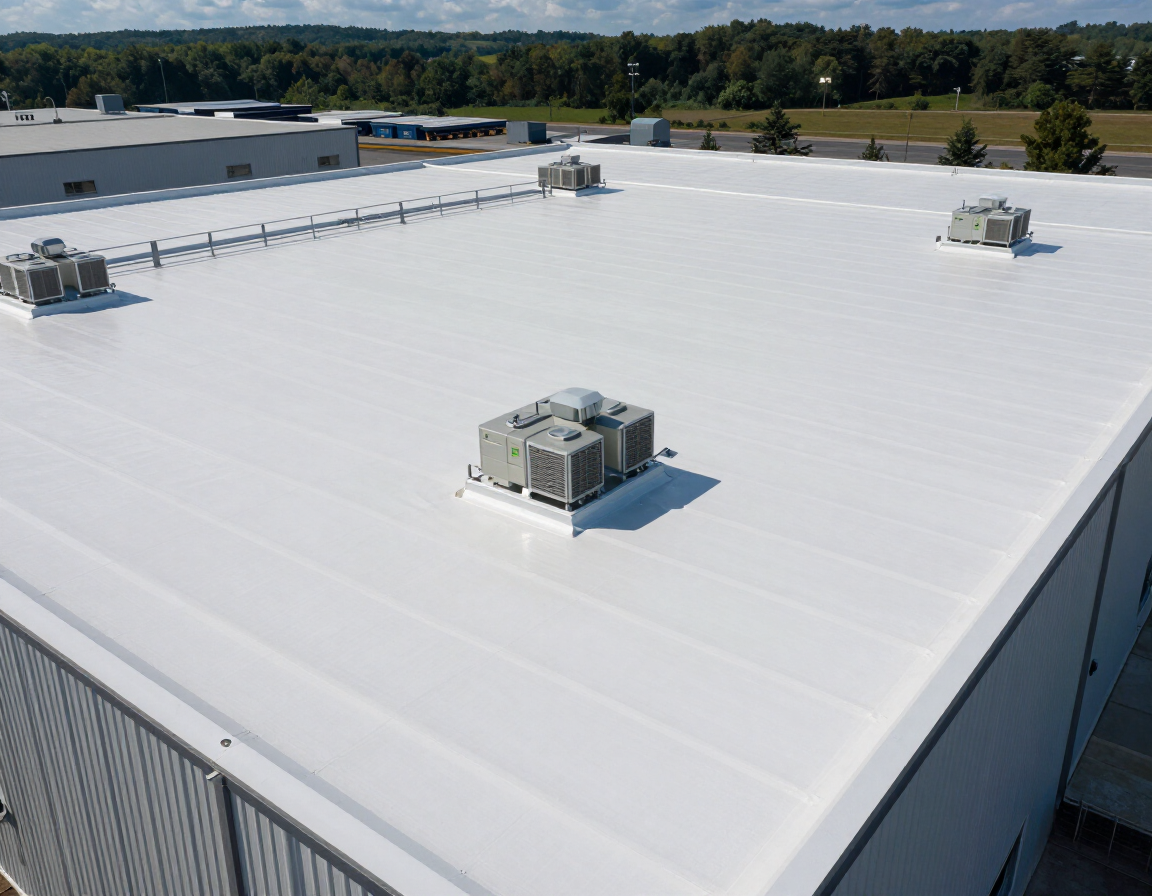
What Do TPO and EPDM Roofs Cost?
Joyland's current commercial roofing pricing guide lists planning ranges of $8 to $15 per square foot for TPO replacement and $10 to $15 per square foot for EPDM replacement as of August 2026.
Those ranges overlap for a reason. The final cost is shaped by more than the membrane. Building height, access, tear-off, deck repairs, penetrations, insulation value, tapered drainage work, cover board, attachment method, perimeter details, and warranty all affect the proposal.
Use the published ranges to establish a rough budget. Use an on-roof inspection to price the actual scope. A low per-square-foot number is not a bargain if the drainage, insulation, cover board, or warranty you need is missing from it.
A Real Joyland TPO Project in Harrisburg
Joyland's commercial flat-roofing page documents a 2024 office and warehouse project in Harrisburg. The existing roof included leaking EPDM over older asphalt roofing, along with significant ponding water and damaged wood decking.
The solution was not simply "replace EPDM with TPO." Joyland removed the old roofing, replaced damaged deck areas, installed a base layer of polyiso insulation, added tapered material to improve drainage, and finished the assembly with reflective TPO. The published project details list approximately 1,200 square feet, a $22,000 project cost, and a 20-year no-dollar-limit warranty.
That project is a good example of the real decision. The membrane mattered, but the deck repairs, insulation, slope, drainage, details, and warranty were part of the roof that solved the problem.
How to Compare Commercial Roofing Warranties
The largest number on the brochure is not the whole warranty. Ask whether the proposal includes a membrane material warranty, a contractor workmanship warranty, or a manufacturer-backed total-system or no-dollar-limit warranty.
Joyland's flat-roofing page says qualifying commercial systems may be available with manufacturer no-dollar-limit warranties up to 30 years. The exact term and coverage depend on the membrane, thickness, assembly, details, installer authorization, manufacturer approval, and warranty documents selected for the project.
Versico's warranty services information also shows that available protections can vary by system and may include optional coverage for events such as puncture, hail, or higher wind speeds. Do not assume those enhancements are included unless the proposal and final warranty say so.
Before choosing, ask for:
- The exact warranty name and term
- Whether it is material-only or covers the approved roof system
- The membrane thickness and assembly required to qualify
- Wind, hail, puncture, and other optional coverage included
- Manufacturer inspection requirements
- Owner maintenance and documentation requirements
- Exclusions, transfer rules, and claim instructions
- The contractor's separate workmanship coverage
Read the actual warranty document. "Thirty years" is a length of time, not a summary of coverage.
When TPO May Be the Better Fit
TPO may be a strong option when:
- A light, reflective membrane supports the building's energy or appearance goals
- The selected TPO assembly fits the deck, attachment, and wind requirements
- The contractor is trained and equipped to install and check heat-welded seams and details
- Compatible walkways and protection can be designed around rooftop traffic
- The manufacturer offers the assembly and warranty the owner wants
TPO is not automatically better because it is white, newer, or heat welded. It is better when the complete TPO system fits the building and is installed to the specified details.
When EPDM May Be the Better Fit
EPDM may be a strong option when:
- The owner wants a membrane with a long record in commercial roofing
- A reinforced or non-reinforced EPDM product fits the chosen attachment method
- Black, white, or gray EPDM fits the building's energy and appearance goals
- The roof design benefits from the available sheet sizes, accessories, and approved details
- The selected EPDM system provides the desired warranty and project schedule
EPDM is not automatically better because it is older technology or made of rubber. It is better when the specified EPDM assembly solves the building's actual problems.
When Neither Membrane Is the Whole Answer
Sometimes the real question is not TPO or EPDM. A building may need major drainage correction, targeted deck replacement, wet-insulation removal, structural evaluation, or a different roof system altogether.
Modified bitumen, PVC, a coating system, or another assembly may deserve consideration depending on chemical exposure, rooftop traffic, existing materials, building use, and budget. A repair or restoration approach may also make more sense when the existing roof is still serviceable.
The inspection should determine the problem before the proposal chooses the product.
What Joyland Evaluates Before Recommending a System
Joyland's commercial roofing process begins with an on-roof evaluation supported by photos and video. For a TPO-versus-EPDM decision, the inspection should document:
- Existing membrane and number of roof layers
- Leak history and visible moisture concerns
- Roof deck type and visible deterioration
- Drain, scupper, gutter, and low-area performance
- Insulation, slope, and cover-board needs
- Penetrations, curbs, parapets, and perimeter details
- Rooftop equipment and traffic paths
- Building height, access, staging, and operating constraints
- Repair, recover, or replacement options
- Energy goals, ownership timeline, budget, and warranty priorities
Joyland is based in Lancaster County and serves commercial clients across central and eastern Pennsylvania, with commercial work extending beyond the core residential service area when the project is a fit. That local perspective matters because a mixed Pennsylvania climate is not the same design problem as a roof in a desert or coastal market.
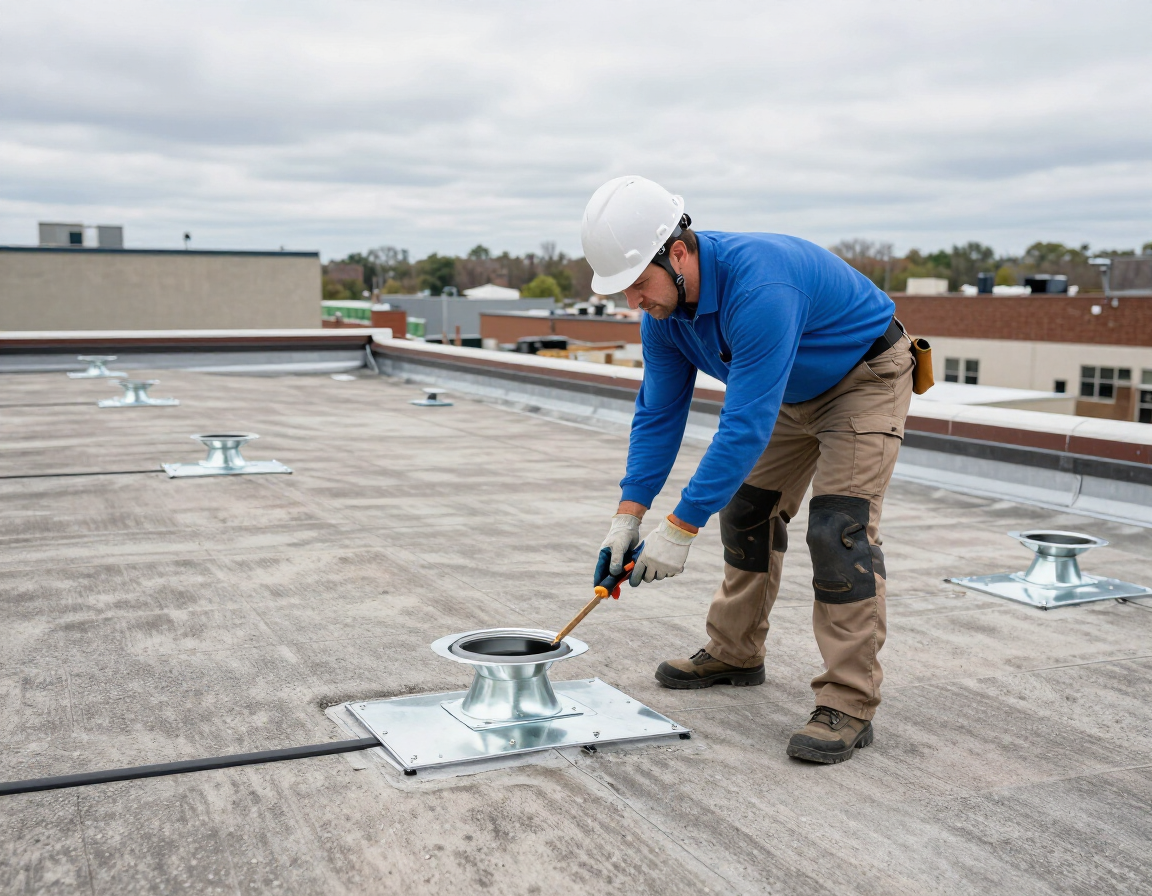
Questions to Ask Before Choosing TPO or EPDM
Use the same questions for every proposal to make sure you are comparing complete assemblies, not just membrane names.
If two proposals answer those questions differently, you are not comparing the same roof.
Questions to Ask Before Choosing TPO or EPDM
Use the same questions for every proposal:
- What exact membrane manufacturer, product, color, reinforcement, and thickness are included?
- Is the system adhered, mechanically attached, induction welded, ballasted, or another approved assembly?
- What insulation value and cover board are included?
- How will ponding or poor drainage be corrected?
- What existing materials will be removed, and what can remain?
- How will wet insulation or damaged decking be identified and priced?
- What walkways and protection are included around service areas?
- What quality-control checks will be completed on seams, flashings, and penetrations?
- Will a manufacturer representative inspect the completed roof?
- What exact warranty will be issued, and what does it cover?
- What owner maintenance is required after installation?
- What could change the final price?
If two proposals answer those questions differently, you are not comparing the same roof.
TPO vs. EPDM FAQs
Is TPO Better Than EPDM for a Commercial Roof in Pennsylvania?
Not automatically. TPO and EPDM can both be appropriate in Pennsylvania. The better system depends on the roof deck, drainage, insulation, attachment, traffic, energy goals, schedule, installer qualifications, and warranty. An inspection is needed to compare complete assemblies for the building.Does TPO Always Save More Energy Than EPDM?
No. A light-colored TPO membrane can reduce solar heat gain, but actual energy savings depend on climate, insulation, air leakage, HVAC efficiency, roof condition, and building use. Reflective EPDM products also exist. Compare the published properties of the exact membranes and evaluate the whole building.Can TPO or EPDM Be Installed Over an Existing Roof?
Sometimes. A recover may be possible when the existing assembly is dry, stable, compatible, and allowed by the applicable code, manufacturer system, and project requirements. Wet insulation, damaged decking, too many existing layers, or incompatible materials may require partial or full removal.How Long Do TPO and EPDM Roofs Last?
There is no single honest lifespan for every TPO or EPDM roof. Manufacturers offer different warranty terms based on membrane thickness, attachment, insulation, cover board, details, and inspection requirements. Actual service life also depends on drainage, installation quality, exposure, maintenance, damage, and repairs. Use the specified system and warranty as a starting point, not a promise of an exact replacement date.Is TPO or EPDM More Resistant to Punctures?
It depends on the exact product and assembly. Reinforcement, membrane thickness, fleece backing, cover board, substrate, and walkway protection all influence puncture performance. Compare product data for the specified systems instead of making a blanket material claim.How Often Should a Commercial Roof Be Inspected?
Follow the manufacturer warranty and maintenance requirements for the installed system. It is also wise to inspect after major storms, rooftop construction, or equipment service that may have damaged the membrane. Routine checks should include drainage, flashings, seams, penetrations, perimeter details, and traffic areas.
Get a Commercial Flat Roof Recommendation From Joyland
The goal is not to crown a membrane champion. It is to design a roof that fits the building and give the owner a scope that can be checked line by line.
If you manage a commercial building in south-central or eastern Pennsylvania, contact Joyland Roofing to schedule a commercial roof inspection and quote. Joyland can document the existing condition, explain repair, recover, and replacement options, and compare TPO, EPDM, or another appropriate system without pretending one membrane wins every time.
Pricing and source links reviewed August 2026. Published product options, warranty terms, and Joyland planning prices can change. Confirm the exact current products, assembly, coverage, and project price in the written proposal and warranty documents.

John Esh | CEO & Master Installer
- 25+ Years Experience: From ground crew to Master Certified Installer.
- Local Roots: Serving Lancaster, Harrisburg, and SEPA since 1991.
- Credentials: GAF Master Certified (ME27586); Licensed in PA (PA124258) & MD (#137952).
- The "Why":
Obsessed with "radical transparency" to remove the fear factor from home improvements.
James Wesser | Content Producer
- Background: Former local news digital producer and journalist.
- The Mission: Turning complex roofing jargon into clear, "fluff-free" answers for homeowners.
- Local Tie: When not filming on-site, he’s likely roaming Hersheypark or building digital worlds.