Is Insulated Siding Worth It for Pennsylvania Homeowners?

John Esh • December 17, 2025

Lorem ipsum dolor sit amet

Lorem ipsum dolor sit amet, consectetur adipiscing elit. Sed do eiusmod tempor incididunt ut labore et dolore magna aliqua. 

The Real Insulation Value of Insulated

Vinyl Siding

The best insulated vinyl siding options on the market have an R-value (that’s the measure of insulation) between R-2 and R-3. For perspective, Pennsylvania’s building codes require R-30 in ceilings and R-20 in walls. So yes, that little bump from the siding helps—but only a little.


If your goal is to lower heating bills, the numbers probably won’t add up fast enough to justify the extra cost. You’re looking at an extra $2.50 to $3.50 per square foot compared to non-insulated siding. For most homes, that’s a few thousand dollars more.


For illustration, let’s say that you end up saving $50 a month on heating for four months of the year with insulated siding. That’s $200 saved annually. YAY! But on a $5,000 up-charge for materials and installation? You’ll be waiting decades to break even.


What About Fiber Cement Siding?

Fiber cement siding—like James Hardie—isn’t really about insulation. It’s about durability, style, and low maintenance. If you’re focused on reducing drafts or heating costs, fiber cement won’t make a big difference there. But if you want that solid, high-end look and fire resistance, fiber cement wins on aesthetics and longevity.A photo showing the inside of insulated siding.


A Hidden Perk: Wider Vinyl Siding Panels Come Pre-Insulated

Here’s something most homeowners don’t realize: wider vinyl profiles often come with built-in insulation. For example, if you go from a 5-inch panel to a 6- or 7-inch one, insulation is automatically included in most profiles. That wider panel needs extra rigidity so it doesn’t flex or warp too much.


That’s actually why I went with a 6-inch profile on my own house—it gave us the wider, modern look we wanted and came pre-insulated by default. So in that case, it wasn’t about energy savings. It was about aesthetics.


Installation Notes: Trim, Flashing, and Fit

Insulated siding is thicker than non-insulated, which means your installer might need to adjust window trim, door casings, or flashing for a clean, tight fit. If your home already has tight architectural details, this can add a little complexity to the project. Nothing major, but worth planning for, and it can also contribute to higher costs for the insulated option.


So… Is Insulated Siding Worth It?

If you’re hoping to save money on energy bills, probably not. If you love the clean, wider-profile look, absolutely! Want slightly more soundproofing? Maybe a little more durability? Maybe.

Category Verdict
Looks Yes Wider profiles look great and often include built-in insulation for rigidity.
Insulation / Energy Savings Not really R-2.5 to R-3 helps a little, but the payback on that cost is slow in PA climates.
Impact / Wind Resistance Slightly Added rigidity helps, but proper installation matters more than the foam backing.

Frequently Asked Questions About Insulated Siding


Does insulated siding increase my home’s energy efficiency?
A little bit, yes—but not enough to make a major impact on your energy bills. It can slightly reduce drafts and help with comfort, but most savings come from your attic and wall insulation.


Will insulated siding make my home quieter?
It can reduce exterior noise slightly since the foam backing absorbs sound. If you live near a busy road, it might help a little. But windows are typically the big bully culprit for sound transmission, so you might want to think about 
upgrading your windows instead.


Can insulated siding protect my home better from hail or wind?
It adds some rigidity, but it’s not a night-and-day difference. Proper installation matters more for wind resistance than the siding type itself.


Is insulated siding a good choice for Lancaster County weather?
It can help a little with temperature swings, but Pennsylvania’s real energy loss happens more through the attic, windows, and doors. Focus your upgrades there first.


How do I know which siding type is right for me?
If you want a stylish, low-maintenance exterior, insulated vinyl or fiber cement are both great. Talk with your siding contractor about your goals—whether it’s looks, budget, or performance. Check out this post about 
siding material options, or this one to learn about Fiber Cement siding pricing.


Serving homeowners across From York, Carlisle and Lancaster to West Chester and Lansdale, Joyland Roofing & Exteriors helps you choose the siding that fits your style, your budget, and your home’s needs—without the sales gimmicks.


Give us a call at 717-704-8517 or fill out our contact form!

By John Esh February 11, 2026
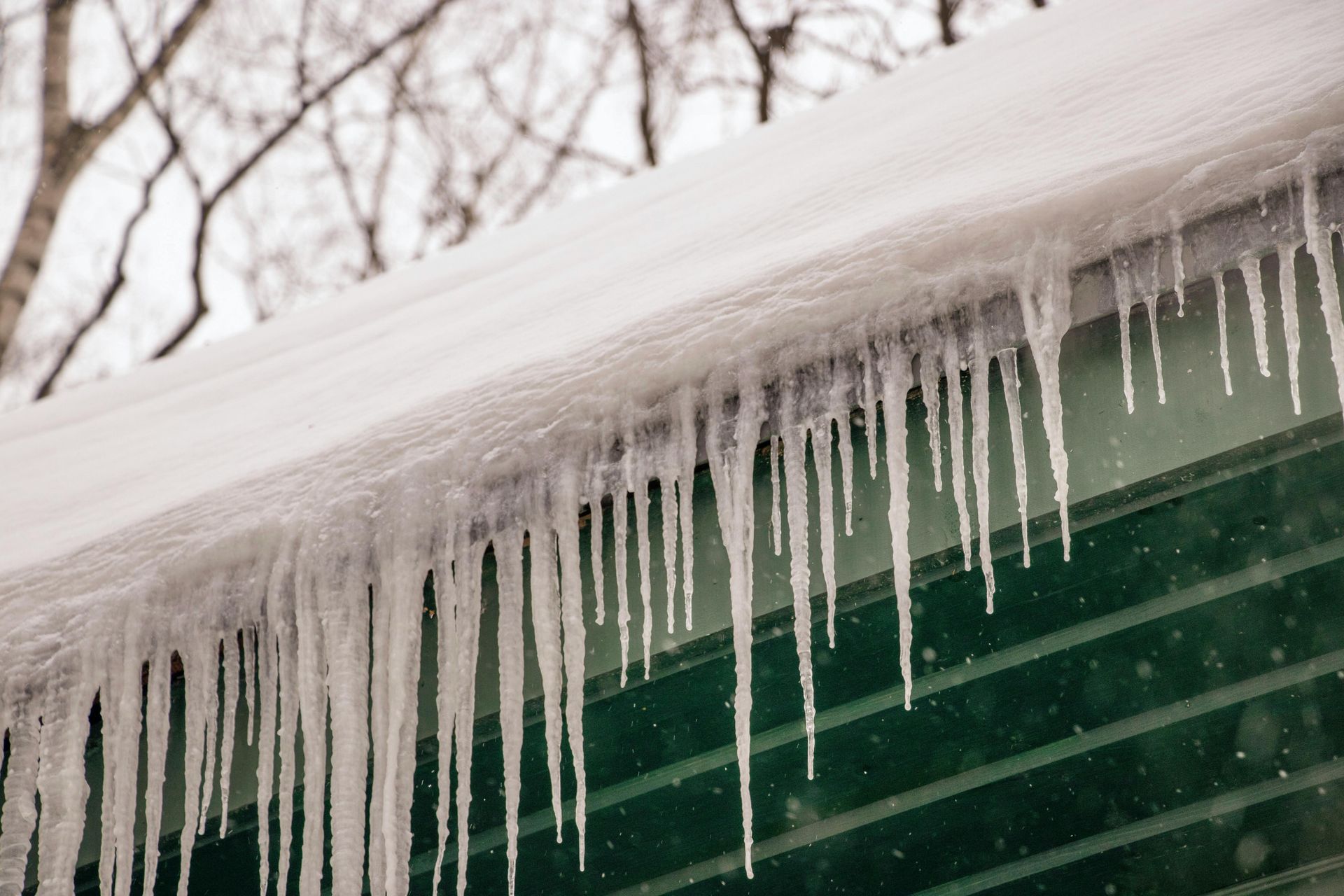
If your roof is building an ice dam here in Central PA, this guide gives you quick steps you can take right now and a clear explanation of how to prevent it in the future. Quick Actions For Active Leaks If you have a leak under an ice dam, here’s what you can do right away. • Get a bucket under the drip if you can access the crawlspace or attic. • Knock down heavy icicles using a broom or long pole to reduce gutter weight. • Remove as much snow from the roof as you can using a snow rake. • Use Calcium Chloride, not salt. You can fill old socks or hose with it and place them across the ice dam to melt channels. • Avoid metal tools like chisels or hammers. They will damage shingles and gutters. If you can’t safely reach the roof, call a roofer. Just make sure they aren’t planning to chop or smash the ice. That always makes things worse. What Causes An Ice Dam? Ice dams happen because your roof deck gets warm even while the outside air is freezing. Heat escapes from your house into the attic, warms the roof deck, melts the snow, then the meltwater runs downhill and refreezes at the cold eaves. That refreeze is the “dam.” This repeats in a loop. Warm air escapes. Snow melts. Meltwater flows. It hits the cold eaves. It freezes. It builds a ridge. The ridge traps water. The trapped water backs up under shingles and causes leaks. Should You Remove The Ice Dam Or Wait? If there’s no leak and the dam is small, and the snow is mostly off the roof, you can usually wait for a warm-up. If any of these are true, you should get it removed quickly: • You already have a leak • The ice dam is large • There’s a lot of snow on the roof • The forecast stays below freezing for several days Gutters around Central PA are typically rated for 40 to 50 pounds per foot. Ice weighs about 57 pounds per cubic foot. It adds up fast and can pull gutters right off the house.
By John Esh February 8, 2026
Search Blog
By John Esh February 8, 2026
Search Blog
By John Esh February 8, 2026
Search Blog
By John Esh February 8, 2026
Search Blog
By John Esh February 8, 2026
Search Blog
By John Esh February 8, 2026
Search Blog
By John Esh February 8, 2026
Search Blog
By John Esh February 7, 2026
Search Blog
By John Esh February 7, 2026
Search Blog