
Ladder Safety 101: Before You Climb, Take 10 Seconds to Check This
James Wesser
April 13, 2026

Lorem ipsum dolor sit amet

Lorem ipsum dolor sit amet, consectetur adipiscing elit. Sed do eiusmod tempor incididunt ut labore et dolore magna aliqua. 

If your ladder looks sketchy, your next move should not be upward.  Maybe its only for a quick check near the gutter line. But if the ladder getting you up there is bent, cracked, sitting wrong, or set up at a bad angle, the real problem might not be the roof anymore.


Ladders are not the place to freestyle.


One bad setup or one bad step can turn a roofing issue into a whole different kind of emergency.

Before You Climb, Check the Ladder First

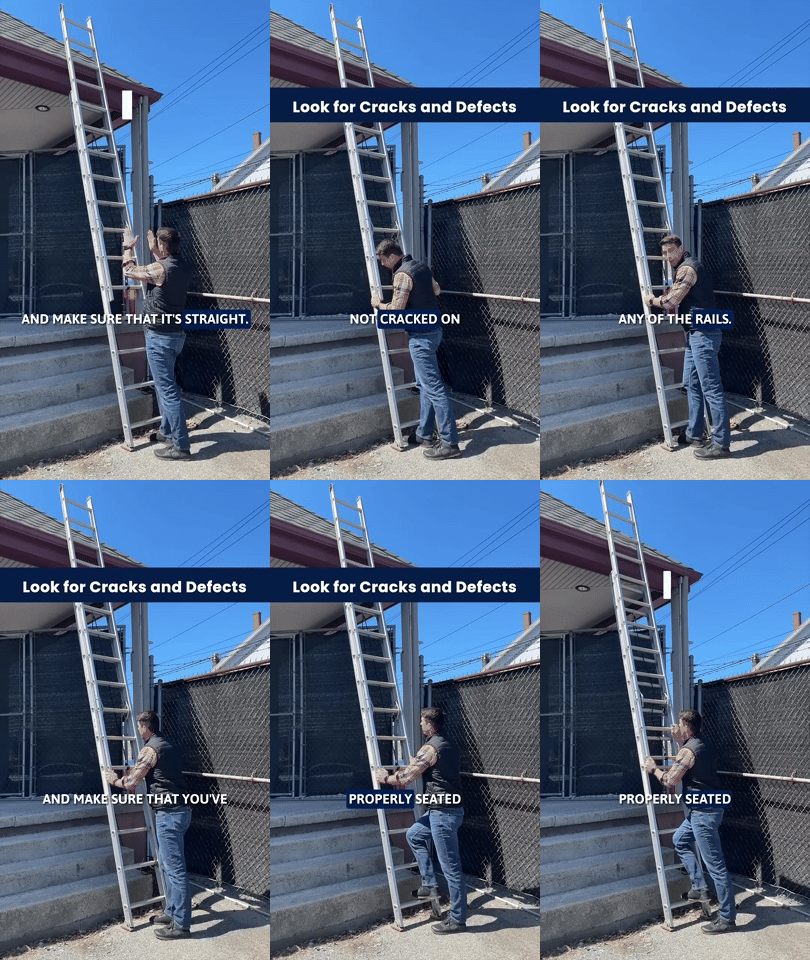
Person holding a ladder against a house exterior under a blue sky

Before you even put a foot on the ladder, take a few seconds to look it over.


Make sure it is straight. If a ladder has fallen over before, it can get bent and still look “close enough” from a distance. Close enough is not what you want here. Check the rails for cracks, especially on fiberglass ladders. Look at the rung locks and make sure they are fully engaged, not halfway seated or hanging on by a thread. If anything looks damaged, loose, or questionable, stop right there. OSHA says damaged ladders should be removed from service, and extension ladder locks need to be properly engaged before use. 


And while you are at it, check the ground too. A good ladder on bad footing is still a bad setup. Ladders should be used on stable, level surfaces unless they are secured to prevent movement.
The Setup Matters More Than Most People Think

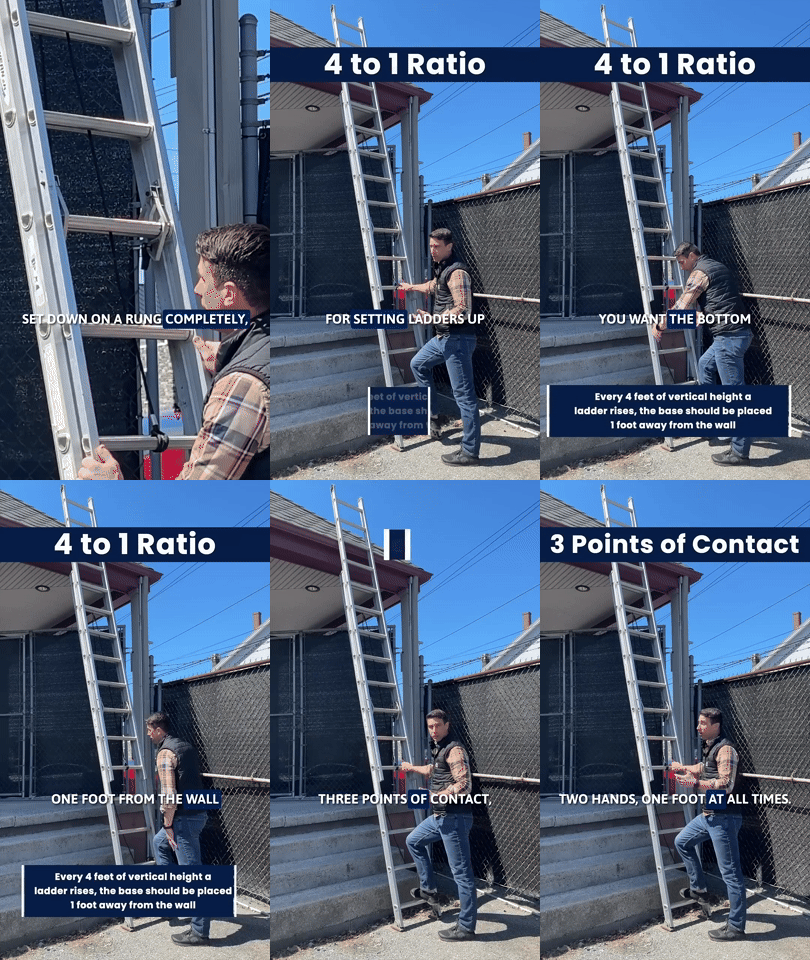
Man on a ladder beside a building, gripping the rungs and looking upward.

A lot of ladder accidents happen before anyone even gets near the roof.


One of the biggest things to get right is the angle. A good rule is the four-to-one ratio. For every four feet of working length, the base of the ladder should be about one foot out from the wall. In plain English, if the ladder is going up about 16 feet, the bottom should be roughly 4 feet away from the house. That angle helps keep the ladder from kicking out at the bottom or pulling away at the top. 


If you are using the ladder to access the roof, it should extend at least 3 feet above the upper landing surface so you have something to hold onto when stepping on and off. If that extension is not possible, OSHA says the ladder must be secured at the top to a rigid support and a grasping device should be provided. 


That is also why ladder placement matters. Set it up where you can safely access the roof edge without crowding yourself into a bad position.

Climb Like You Mean It

Once the ladder is set, the next part is simple, but it matters.

Keep three points of contact the whole way up and down. That means two hands and one foot, or two feet and one hand, on the ladder at all times.


OSHA recommends this because it helps you stay balanced and in control while climbing.

Some other tips you should keep in mind are:

  • Keep your body close to the ladder.
  • Do not lean way out to the side.
  • Do not reach too far.
  • Do not try to turn yourself into a human counterweight and hope it works out.


When you lean too far, you can shift the ladder, pull it away from the house, or cause it to slide.


Face the ladder while climbing, stay centered, and take your time. If you need tools, do not carry something that throws off your balance. OSHA specifically warns against carrying items that can cause you to lose balance while climbing. 

Watch Where You Set It

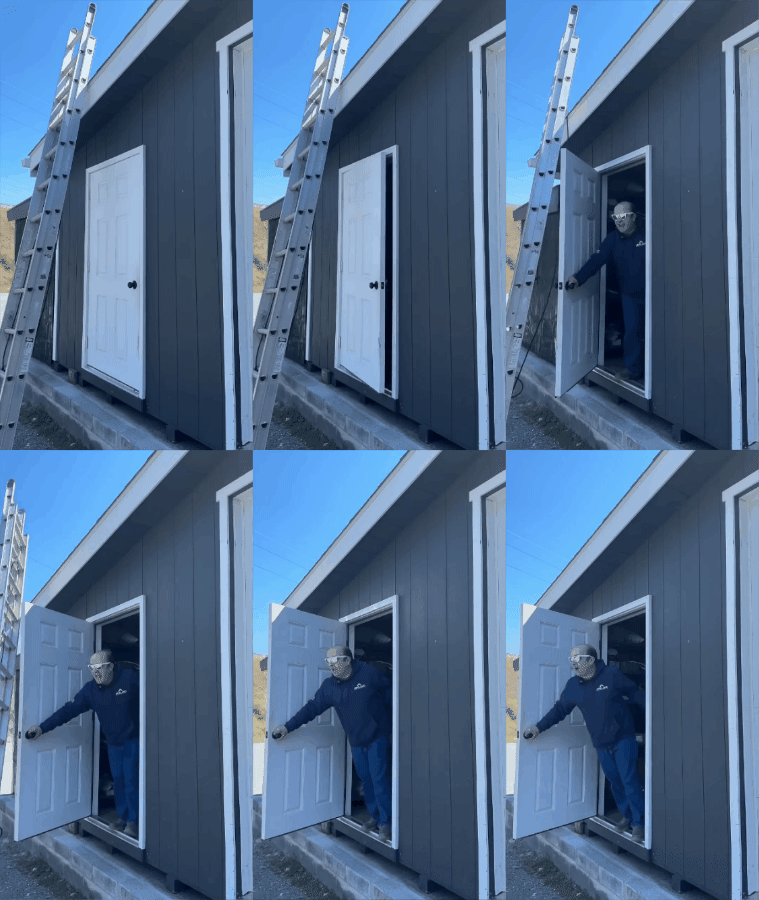
Ladder leaning against a gray building beside a white door under a bright blue sky

Even a perfectly good ladder can become dangerous if it is set up in the wrong spot. Where you place it matters just as much as the condition of the ladder itself.


Do not set a ladder up in front of a door, in a driveway, or anywhere people are regularly walking unless it is properly secured or the area is clearly blocked off. A ladder can be bumped, shifted, or knocked loose faster than you think, especially in busy areas around a home. OSHA requires ladders in places like doorways, passageways, or driveways to be secured or protected from traffic. The space around both the top and bottom of the ladder should also be kept clear so you are not climbing around tools, debris, or anything else that could throw you off balance.


That might sound obvious, but obvious has a way of getting ignored when people are in a rush. A ladder set in the wrong place can go from “good enough” to dangerous in a hurry, and that is not a gamble worth taking.

If You’re Not Comfortable, Don’t Risk It

If you are not comfortable climbing a ladder, setting one up, or working near a roof edge, that is not a weakness. That is common sense.


Take 10 seconds. Check the ladder. Make sure it is secure. Make sure it is set up right. If you are uncomfortable with any part of it, please call someone who is.

Because again, ladders are not the place to freestyle.

One bad step can turn a roof problem into a much bigger one.


Not sure whether it is safe to check yourself? We can help. Joyland Roofing can inspect your roof, document any problem areas, and give you clear recommendations so you are not left guessing. Click the button below to get started with scheudling your free inspection.

Frequently Asked Questions

  • How should a ladder be positioned against a house?

    A good rule is the 4 to 1 ratio. For every 4 feet of ladder height, the base should be about 1 foot away from the wall. That helps create a safer climbing angle and reduces the chance of the ladder kicking out at the bottom

  • How far should a ladder extend above the roof edge?

    If you are using a ladder to get onto a roof, the side rails should extend at least 3 feet above the landing surface. That gives you something to hold onto when stepping on or off the roof

  • What does “three points of contact” mean?

    It means keeping either two hands and one foot, or two feet and one hand, on the ladder at all times while climbing. This helps you stay balanced and lowers the risk of slipping.

  • Should you inspect a ladder before using it?

    Yes. Before climbing, check that the ladder is straight, the rails are not cracked, the locks are fully engaged, and the feet are stable. OSHA recommends inspecting ladders before use and taking damaged ladders out of service.

  • Can you set a ladder on uneven or soft ground?

    A ladder should be used only on stable, level surfaces unless it is secured or stabilized to prevent movement. If the ground is soft, sloped, or uneven, the setup is not safe.

  • When should you call a professional instead of climbing up yourself?

    If you are not comfortable setting up a ladder correctly, climbing safely, or working near a roof edge, it is best to call a professional (like us!)


    Even a small roofing issue is not worth risking a fall. OSHA materials consistently emphasize training, inspection, and proper setup before ladder use

John Esh | CEO & Master Installer

  • 25+ Years Experience: From ground crew to Master Certified Installer.
  • Local Roots: Serving Lancaster, Harrisburg, and SEPA since 1991.
  • Credentials: GAF Master Certified (ME27586); Licensed in PA (PA124258) & MD (#137952).
  • The "Why": Obsessed with "radical transparency" to remove the fear factor from home improvements.

James Wesser | Content Producer

  • Background: Former local news digital producer and journalist.
  • The Mission: Turning complex roofing jargon into clear, "fluff-free" answers for homeowners.
  • Local Tie: When not filming on-site, he’s likely roaming Hersheypark or building digital worlds.

Meet The Experts