


January 2, 2026
Parts of a Roof Exposed: Why Your Shingles Are Only 10% of the Solution
Author
When most homeowners think about the parts of a roof, they picture shingles—and that’s it. But shingles are only about 10% of the whole system. What really protects your home lives underneath: the wood skeleton, the waterproofing layers, the ventilation, and all the small details that keep water moving in the right direction. In roofing, the hidden parts do the heavy lifting. In this guide, we break down every critical component—from framing and decking to flashing, ventilation, and drainage—so you can understand how a real roofing system works and why the details matter more than the shingles you see.
Table of Contents
- TL;DR: The Quick Breakdown
- Beneath the Surface: The Structural Skeleton
- The Invisible Shield: Weatherproofing Components
- The Outer Shell: Visible Exterior Parts
- Breathing Room: Ventilation and Drainage
- The Joyland Roofing Approach
- Final Thoughts
TL;DR: The Quick Breakdown
- Structure comes first: Your roof is only as good as the lumber holding it up. We always check for rot and structural issues before we nail down a single shingle.
- Waterproofing is invisible but vital: The stuff you don't see (leak barriers and underlayment) is actually what keeps your living room dry.
- Ventilation extends lifespan: If your roof can't breathe, it bakes. A balanced airflow system prevents mold and keeps your shingles from cooking.
- Details matter: Most expensive leaks happen because of small things—like missing drip edges or bad flashing—not bad shingles.
- It's a system: Buying top-tier shingles without fixing the ventilation or decking is like putting a Ferrari engine in a rusted-out sedan.
Beneath the Surface: The Structural Skeleton
When identifying the different parts of a roof, most homeowners look up, see the shingles, and think that's the whole story. But honestly? That’s just the skin. I’m looking at the bones. The load-bearing lumber gives your home its shape and keeps the roof off your lap. Before we talk about curb appeal, we have to strip away the layers and look at the wood itself. Whilemost roofs last 20 to 80years, that lifespan depends heavily on the quality of the skeleton underneath. If the frame is compromised, the most expensive shingles in the world won't save you. We treat the roof like a hierarchy, and the wood frame is the king. Fixing the root cause usually means starting here.
Framing the House: Trusses and Rafters
The shape of your roof comes from the framing, usually made of rafters or trusses. These pieces of wood determine your slope and, more importantly, how much weight the structure can handle. This structural integrity is everything when the weather turns nasty. We saw this clearly during the massive freeze in Texas a few years back, where inches of ice accumulated on roofs. That kind of weight caused steel beams to bend and barns to collapse. If one part of the frame is weak, the load shifts to areas that weren't designed to hold it. Before we start a project, we look for bowing or cracking to ensure the skeleton is solid.
Choosing Between Rafters and Trusses
You likely have one of two systems. Rafters are the old-school method—individual boards cut on-site that run from the peak to the wall. They’re great if you want attic space. Trusses are those pre-fabricated triangular webs you see on newer builds. They're incredibly strong, but the webbing eats up all your storage room.
| Feature | Rafters (Stick Framing) | Trusses (Pre-fabricated) |
|---|---|---|
| Construction | Cut and built right in your driveway. | Built in a factory, shipped on a truck. |
| Attic Space | Open; perfect for attic rooms or storage. | Full of webbing; barely room to crawl. |
| Cost | Takes more time and skill, so it costs more. | Faster and cheaper to install. |
| Span | Limited by how long a board can be. | Can span huge distances without support walls. |
The Ridge Board Function
If you have stick framing (rafters), you have a ridge board. That’s the horizontal timber at the very peak where the rafters meet. Think of it as the spine of the roof. Truss systems generally don't use these.
The Decking Foundation
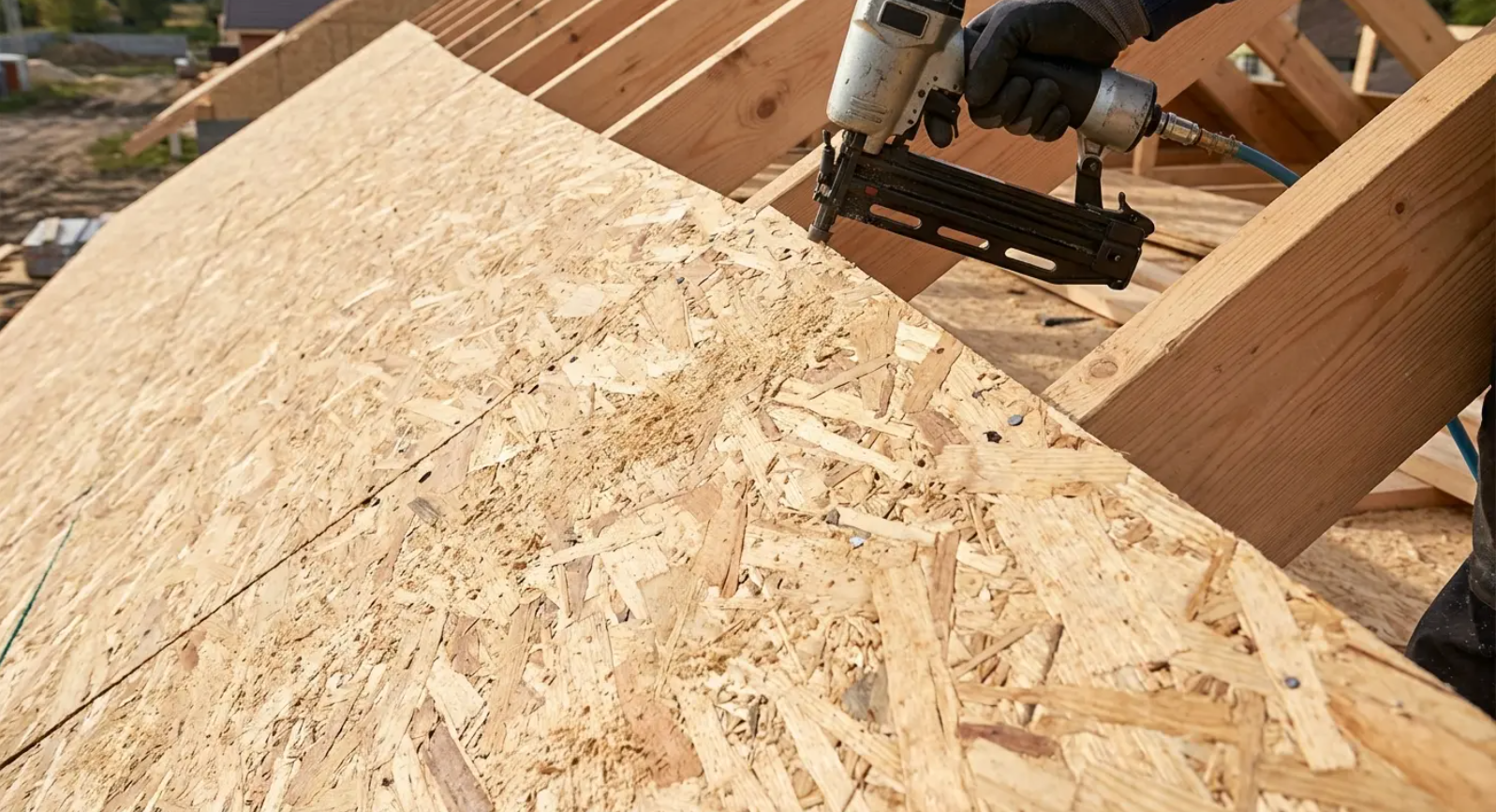
We fasten flat sheets of wood to the framing to create a solid surface. This is called decking or sheathing. Basically, it’s what we nail everything else to. If you want to nerd out on this layer, check our guide on the roof deck. The main takeaway? If the decking is soft, the nails won't hold. And if the nails don't hold, your shingles blow away.

OSB Versus Plywood
Plywood was the standard for decades because it handles moisture well. These days, OSB (Oriented Strand Board) is the go-to. It has better shear strength and costs less. Unless you have a specific reason to use plywood, we usually stick with OSB.
Why H-Clips Matter
Wood moves. It expands in the summer and shrinks in the winter. We place small metal H-clips between the sheets of decking to give them room to breathe without buckling. A flat roof deck means your shingles lay flat, too.
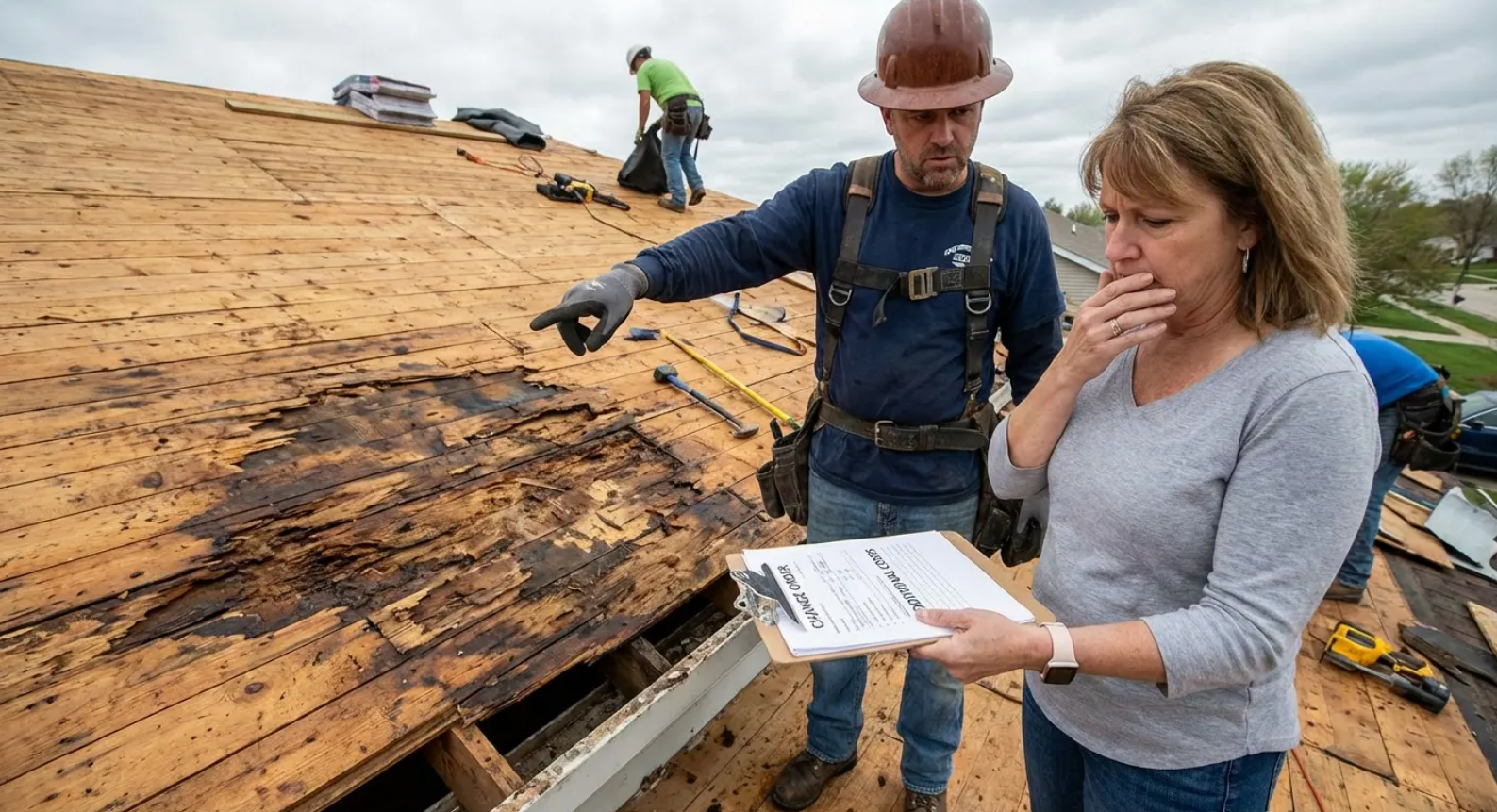
How to Spot Rot
We always inspect the decking before installing new material. Sometimes you can even see issues from the attic. Dark spots, sagging wood, or water stains are bad news. We replace those sheets immediately to ensure the new roof has a solid "bite" for the nails.
Rot Inspection Checklist:
- [ ] Attic Check: Turn off the lights and look for pinholes of daylight coming through the wood.
- [ ] The Walk Test: When we walk on the roof, we feel for "spongy" spots (leave this to the pros, please).
- [ ] Visual Scan: Look for dark rings on the underside of the wood in the attic.
- [ ] Soffit Check: Make sure insulation isn't stuffing up the edges; that traps moisture and rots the wood from the bottom up.
The "Spongy" Deck Scenario:
Imagine walking on a hardwood floor, and then stepping onto a yoga mat. That is what a rotted deck feels like under a boot. We recently worked on a home where the shingles looked fine, but the plywood underneath had delaminated from a slow leak. When we stepped near the chimney, the wood bowed. If we had just nailed new shingles over that "spongy" wood, they would have popped out within a year.
Defining Eaves and Overhangs
Your roof extends past your walls for a reason. That overhang keeps water off your siding and foundation. It’s also where fresh air enters your attic. This is usually where water damage starts, so we keep a close eye on it.
Rake Versus Eave
Roofers use two different terms for the edges. The eave is the horizontal edge where the water drips into the gutter. The rake is the sloped edge that runs up the gable end (the pointy side) of the house.
The Invisible Shield: Weatherproofing Components
Here’s the reality: Wood rots when it gets wet. So, immediately after checking the wood, we apply a waterproofing envelope. You’ll never see these layers once the shingles go on, but they are the difference between a watertight home and a ceiling leak.

Leak Barriers and Ice Shields
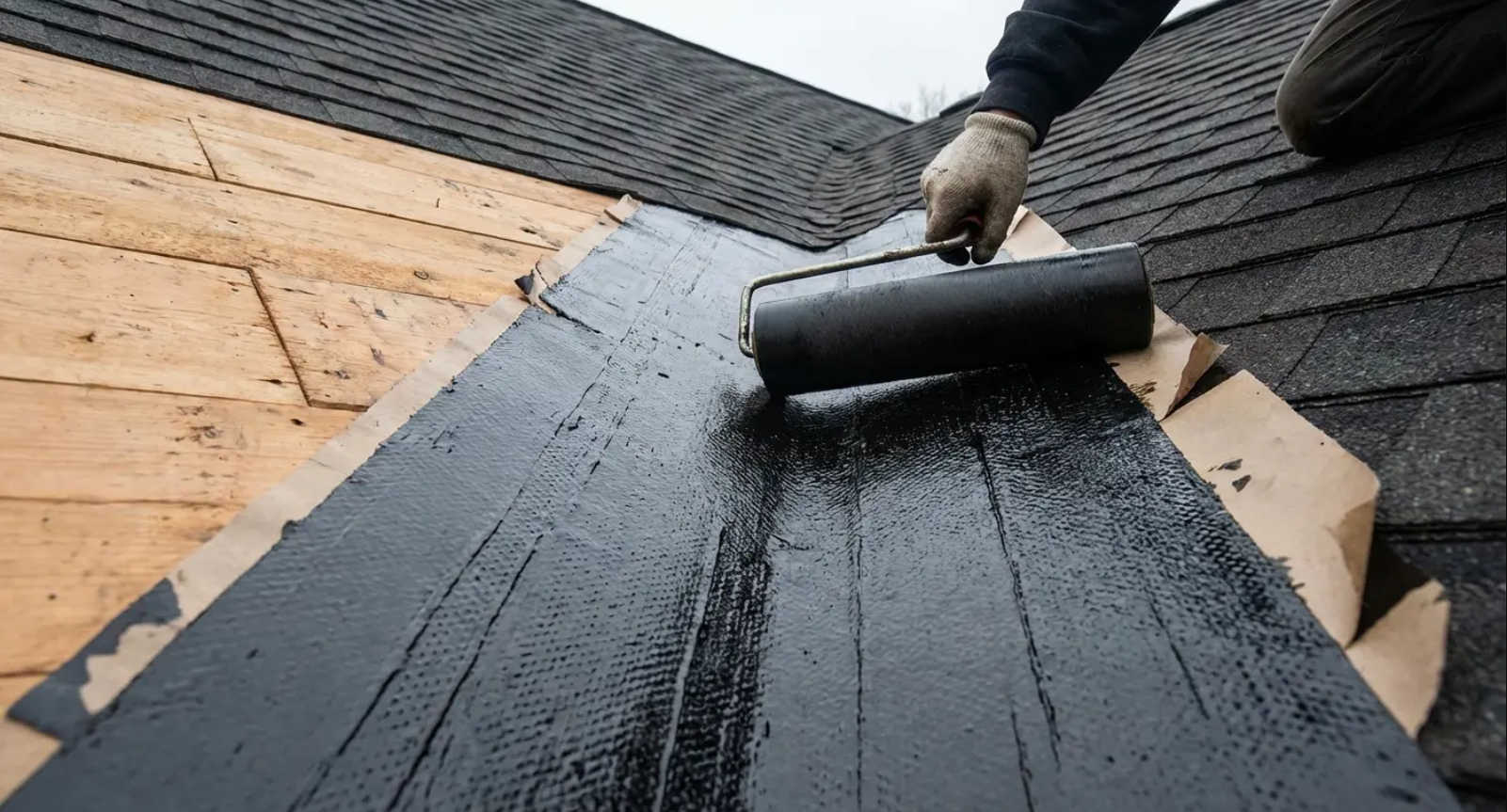
In the most vulnerable spots, we use a self-sealing, rubberized membrane. We usually call it Ice and Water Shield. The magic of this stuff is that it seals tight around nails. If water gets past the shingles, it hits this rubber barrier and stops dead. You can read more about vulnerable roof areas to see why we double up protection here.
Protecting the Eaves
Ice dams and wind-driven rain love to attack the edges of the roof. We install the leak barrier at the eave edge, extending it up the roof at least 24 inches past the interior wall line. This is code in snow-prone areas for a reason.
Sealing the Valleys
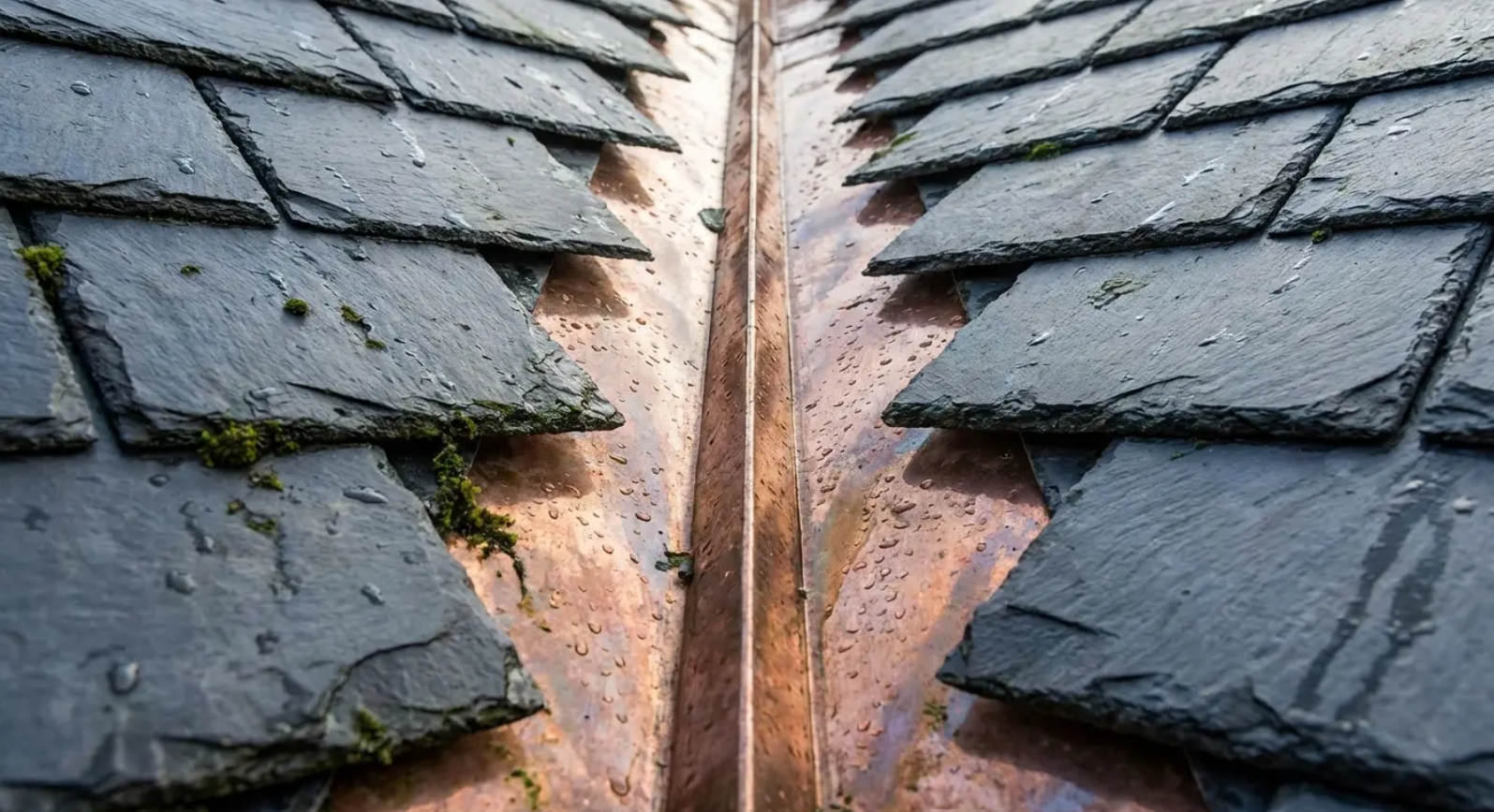
Valleys channel a massive amount of water—it's basically a river during a storm. We run a full strip of leak barrier down the center of every valley before anything else goes down. It acts as a safety net.
Handling Penetrations
Pipes, chimneys, and skylights are literally holes we cut in your roof. We apply squares or strips of shield around these penetrations to seal the gap between the deck and the pipe before the metal flashing goes on.
Modern Underlayment Options
The rest of the deck gets covered by a secondary barrier. This layer sits between the leak barriers and the shingles to protect the wood if a shingle blows off.

Synthetic Over Felt
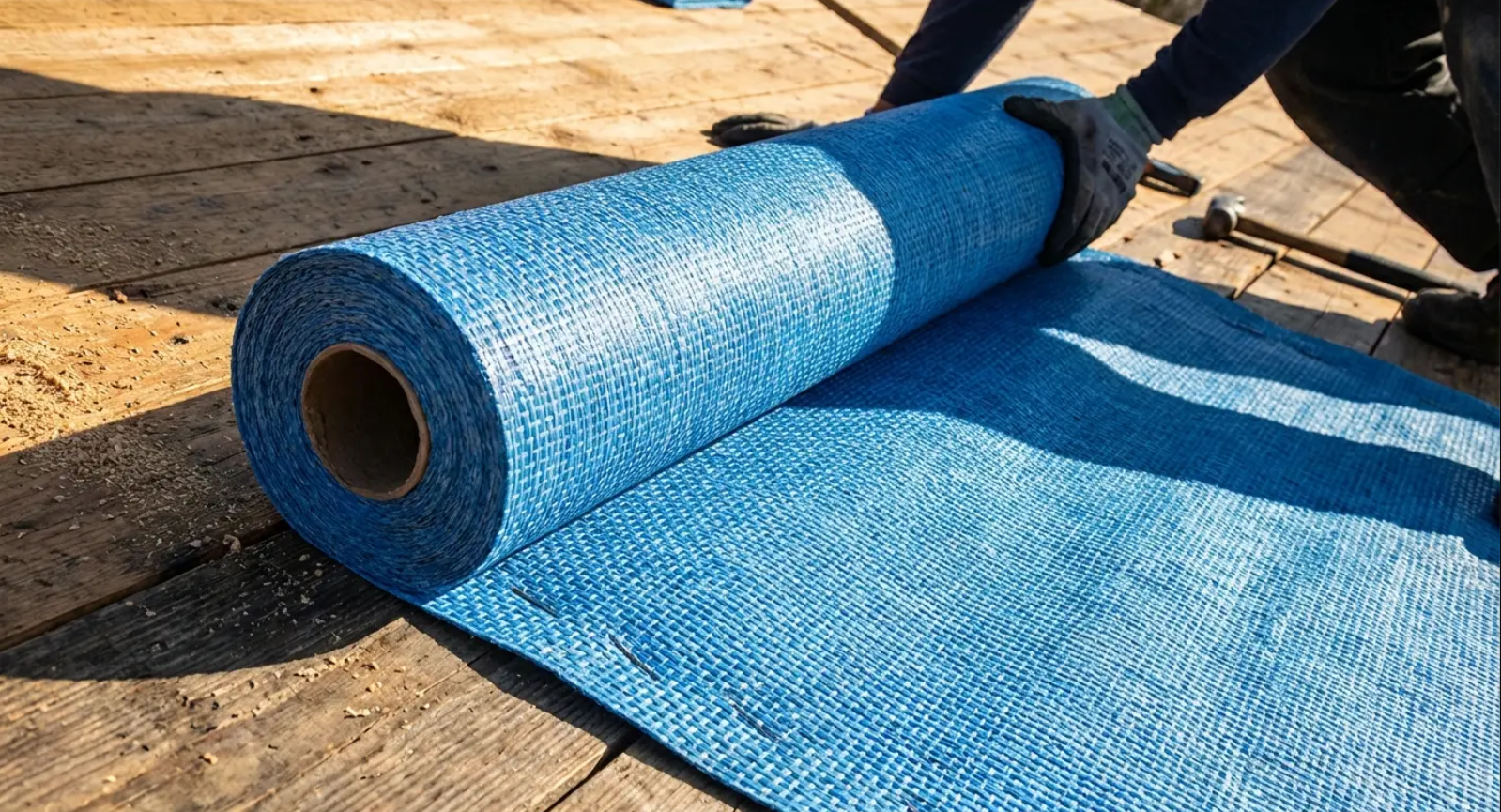
We rarely use asphalt-saturated felt (tar paper) anymore. Synthetic underlayment is just better. It’s made of woven polymers, so it resists tearing, it's lighter, and it repels water instead of soaking it up like paper.
| Characteristic | Asphalt Felt (Tar Paper) | Synthetic Underlayment |
|---|---|---|
| Material | Paper saturated in asphalt. | Woven plastic (polypropylene). |
| Durability | Tears easily; sun destroys it fast. | Tough as nails; can handle UV light for months. |
| Weight | Heavy and annoying to haul up ladders. | Lightweight; covers more area per roll. |
| Water Reaction | Soaks up water and wrinkles. | Repels water and stays flat. |
The Importance of Breathability
Trapped moisture kills roof decks. Modern synthetics are breathable, meaning they let moisture from the attic escape through the deck while still stopping rain from getting in. It’s like Gore-Tex for your house.
The Outer Shell: Visible Exterior Parts
Okay, this is the part everyone sees from the street. These components take the beating from the sun, hail, and wind. While curb appeal matters, the real job here is shedding water. We have to install these parts perfectly to handle wind uplift.
The Field and Shingle Composition
The "field" is just the main open section of the roof. We cover this with shingles. The quality of installation here determines if your roof stays put during a storm.
Don't Skip Starter Shingles
A lot of "budget" roofers skip this to save a few bucks. We install a specific row of starter shingles at the eaves and rakes. They have a sealant strip positioned to lock down the first visible row. Without them, the wind can peel your roof up like a banana.

What Makes an Asphalt Shingle
Modern shingles are a sandwich. You've got a fiberglass mat for fire resistance, coated in asphalt for waterproofing. Then, ceramic-coated granules are pressed into the asphalt to block UV rays and give it color.
Hitting the Nailing Zone
Shingles have a specific line where the nails have to go. We call this the nailing zone. Nail too high? The wind blows the shingle off. Nail too low? The nail head rusts. Precision is non-negotiable here.
The "High Nail" Failure:
We had a homeowner call us after a thunderstorm because they found shingles on their lawn. Turns out, the previous installer was moving too fast with the nail gun and placed the nails two inches too high. They missed the reinforced part of the shingle entirely. The shingles were basically loose sheets of paper flapping in the wind until they tore off.
Flashing Against Walls and Chimneys
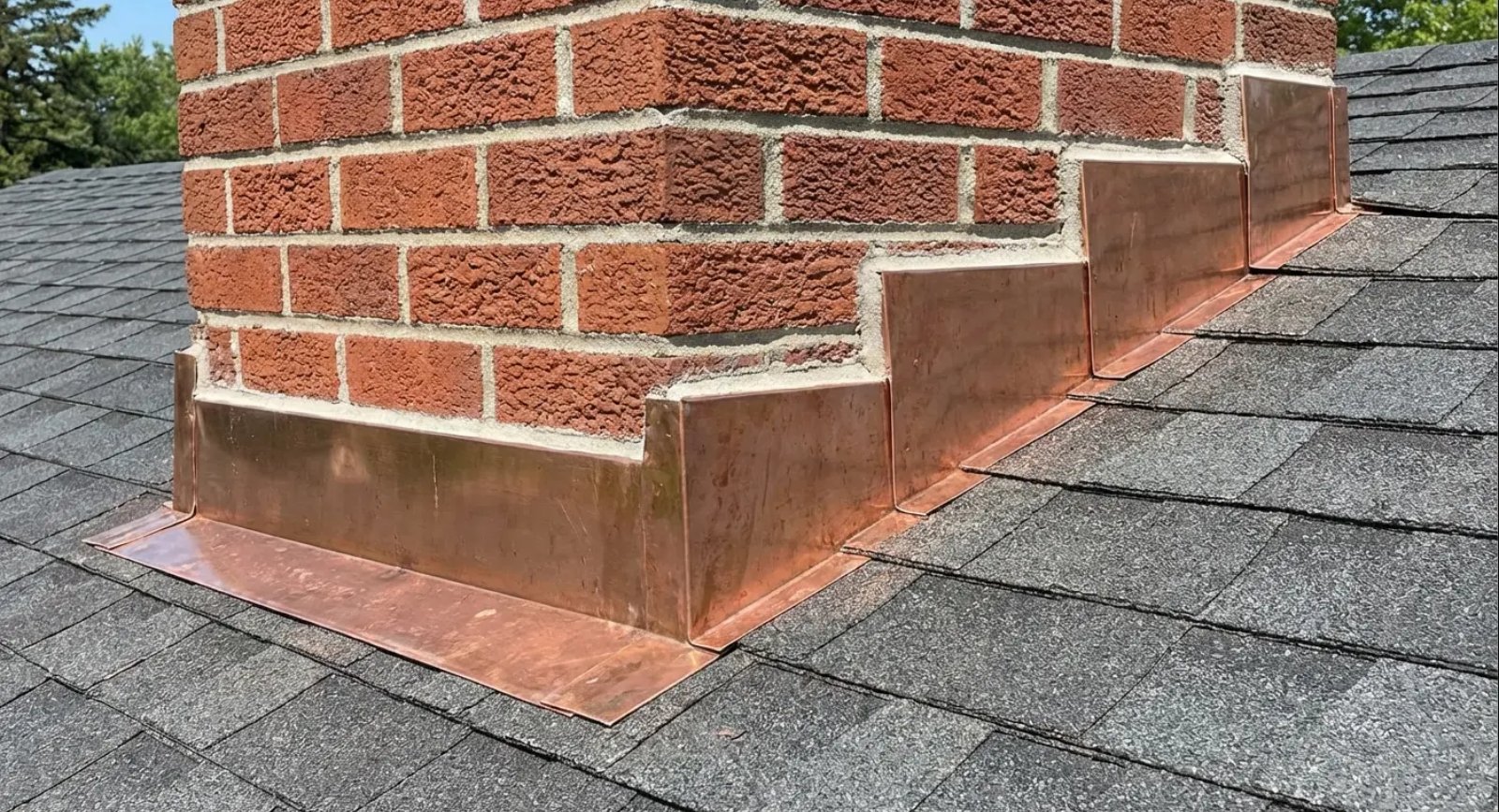
Water is tricky where a roof meets a wall or chimney. We use metal strips called flashing to divert the flow. If this isn't done right, you're going to have a leak. We explain this in detail in our article on roof flashing, but basically, metal is the only thing stopping water in these spots.

Step Flashing Superiorit
We use step flashing for sidewalls. These are L-shaped metal cards interwoven with each shingle. Continuous flashing often fails here. Step flashing ensures that if water gets under one shingle, it gets kicked right back out on top of the next one.
Counter Flashing Essentials
Chimneys need a two-part system. We cut metal into the mortar joint of the chimney, which hangs down over the step flashing. Water runs down the brick, over the counter flashing, and onto the shingles without ever touching the roof deck.
Peaks and Angles: Ridges and Hips
The very top of the roof and the external angles (hips) take a beating from the wind. Standard shingles don't wrap around these angles well.
Cap Shingles
We use specialized cap shingles for the peaks. They are thicker and pre-bent to conform to the angle. They protect the ridge vent and give the roof a finished look.
Managing Water in Valleys
The valley is where two roof slopes crash into each other. It’s a water highway. How we handle this changes both the look and the performance of the roof.

Open Versus Closed Valleys
A closed valley has shingles woven across the center. An open valley leaves a gap with a "W" shaped metal channel in the middle. We like open valleys because they carry water away faster and don't trap leaves and debris.
The California Cut
Sometimes we use a method called the California Cut. We cut the shingles parallel to the valley center line. It offers a sharp, clean aesthetic that looks great with architectural shingles.
Breathing Room: Ventilation and Drainage
Your house produces moisture. Showers, cooking, even just breathing adds up. A roof without ventilation traps that heat and moisture, which cooks the shingles and rots the deck. We engineer a respiratory system to keep the air moving. You can learn more about why your home needs venting, but the short version is: a roof that breathes lasts longer.
Bringing Air In: Intake Ventilation
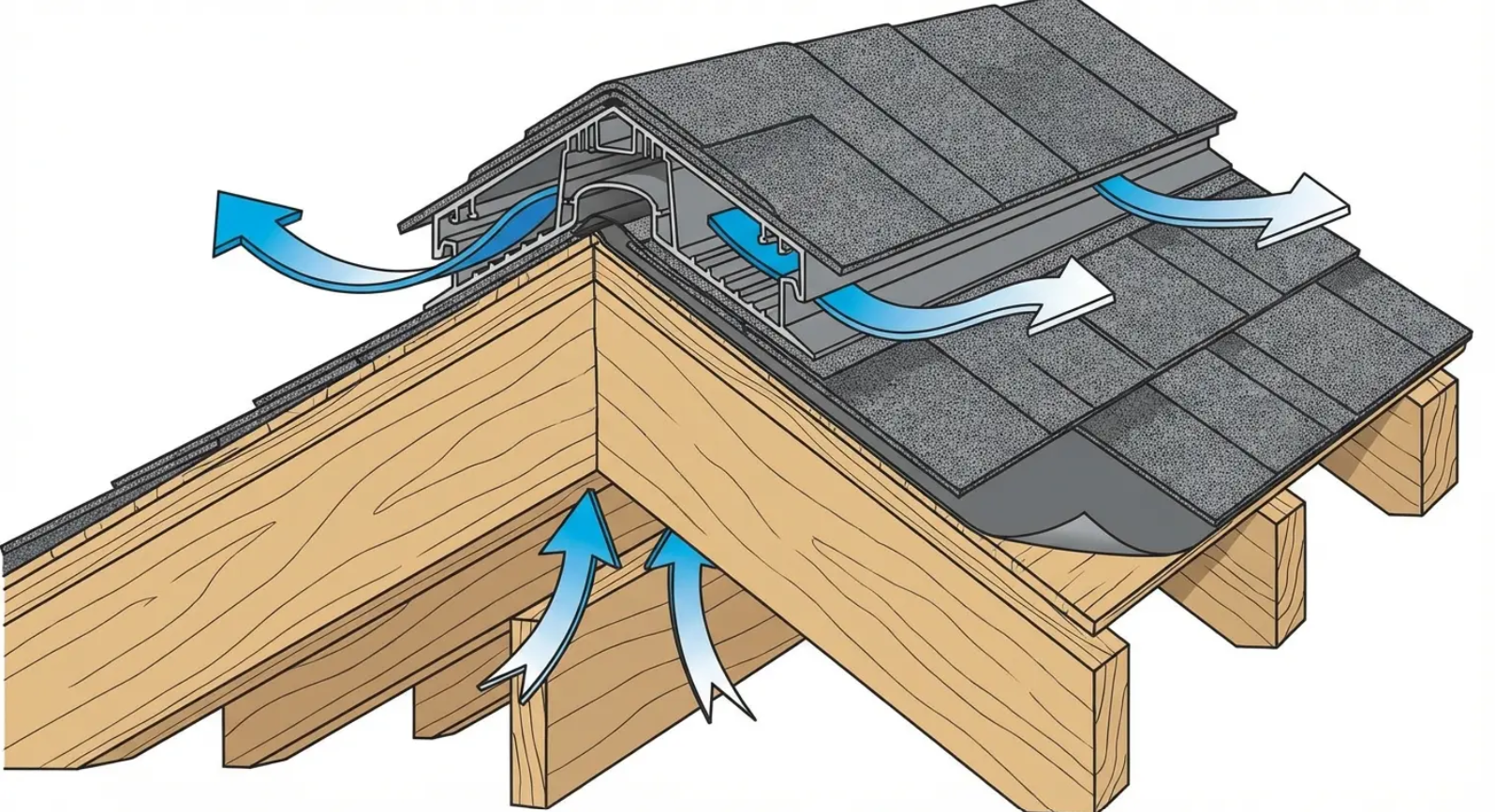
Hot air rises. We need cool, fresh air to enter at the bottom to push that hot air out the top. This intake is the engine of the whole system.

Soffit Vents
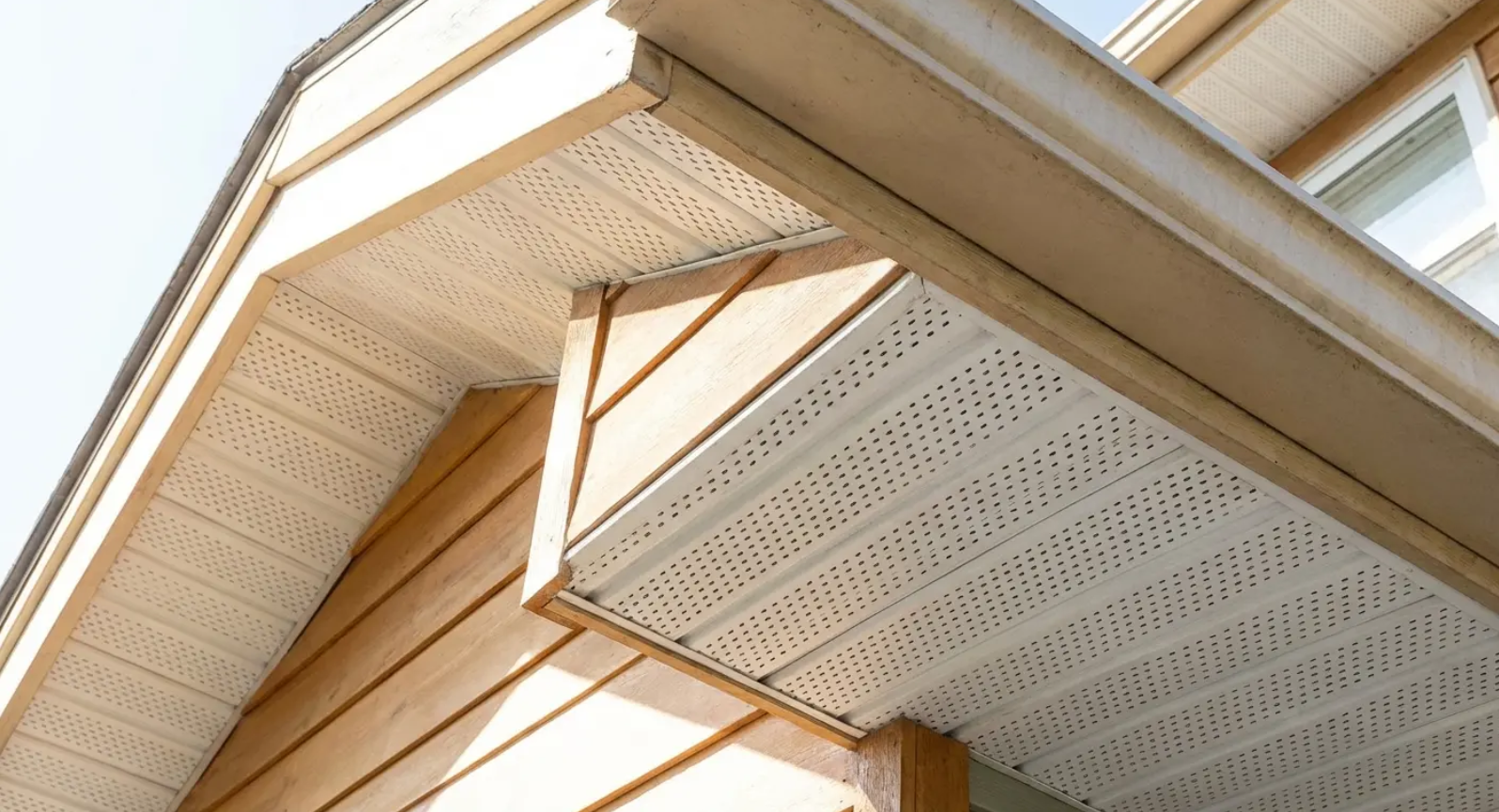
We install perforated panels under the eaves called soffit vents. They work great, provided the insulation in the attic isn't blocking them.
Fascia Vents
If your home doesn't have overhangs, we use fascia vents. They sit directly on the board behind the gutter and let air enter the attic without a traditional eave.
Pushing Air Out: Exhaust Ventilation
The hot air needs an exit door. We place exhaust vents at the highest point of the roof.

Ridge Vents
We cut a continuous slot along the peak of the roof and cover it with a vent and cap shingles. It offers consistent airflow along the entire roofline and blends in perfectly.
Box Vents and Turbines
Box vents are static, while turbines use the wind to spin and pull air out. Important rule: We never mix these with ridge vents. Mixing exhaust types confuses the airflow and can actually suck weather into the attic.
Doing the Math: Net Free Area
We don't guess here. We calculate the Net Free Area (NFA). We divide the attic floor area by 150 to get the square footage of ventilation needed, then split it 50/50 between intake and exhaust. You can use a calculator to calculate your attic ventilation requirements to see how we get the numbers right.
Calculating NFA for a Standard Home:
Let's say your attic floor is 1,500 square feet. Divide that by 150, and you get 10 square feet of required ventilation. That means 5 square feet of intake (soffits) and 5 square feet of exhaust (ridge vents). If you only install the ridge vent without checking the soffits, it’s like trying to suck a milkshake through a straw with your finger over the bottom—nothing moves.
The Final Exit: Water Management
The water has to leave the roof without wrecking the house. Gutters and fascia are the final step. Check out our gutter drainage tips to keep water moving away from your foundation.
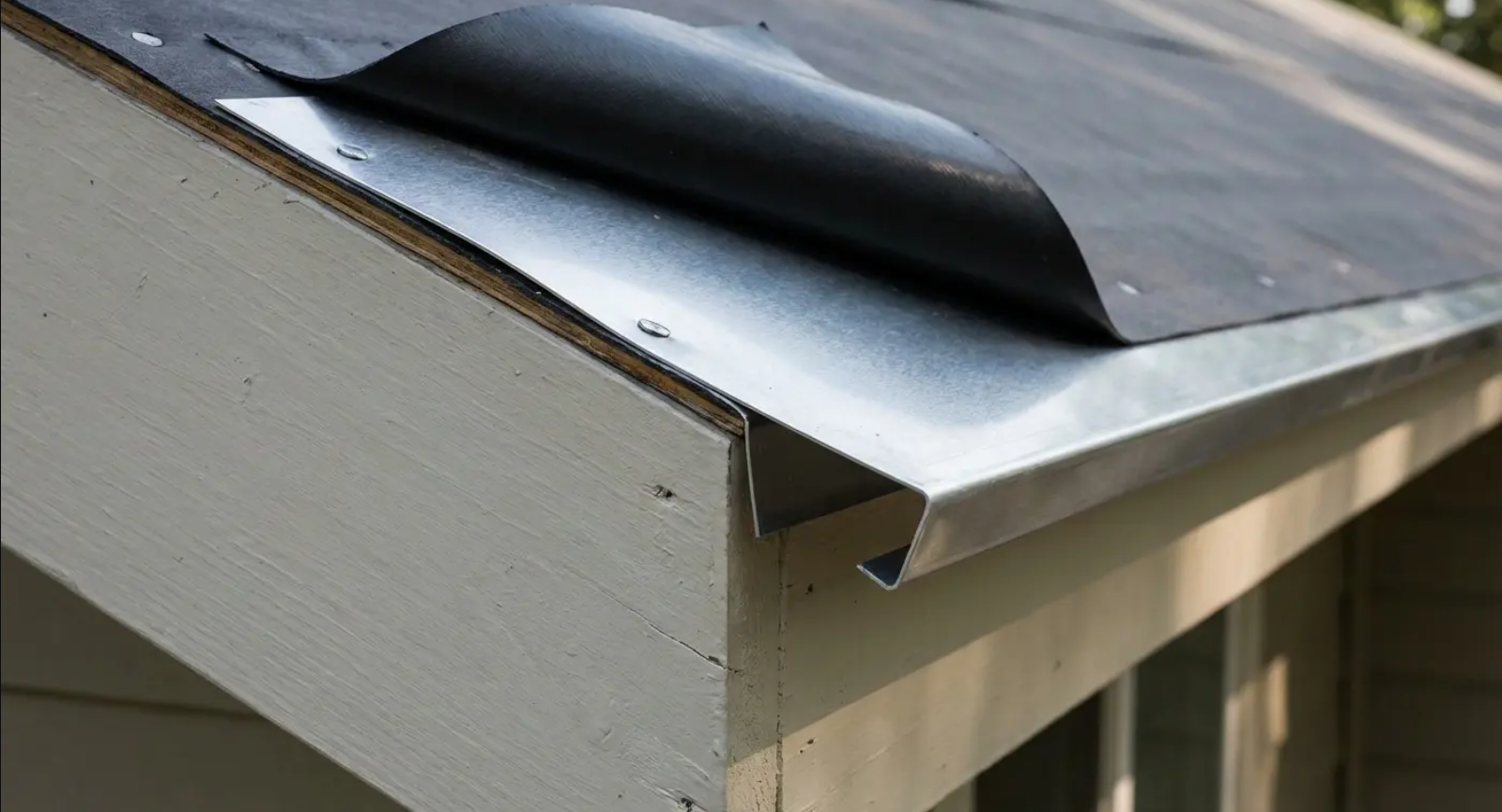
The Critical Drip Edge
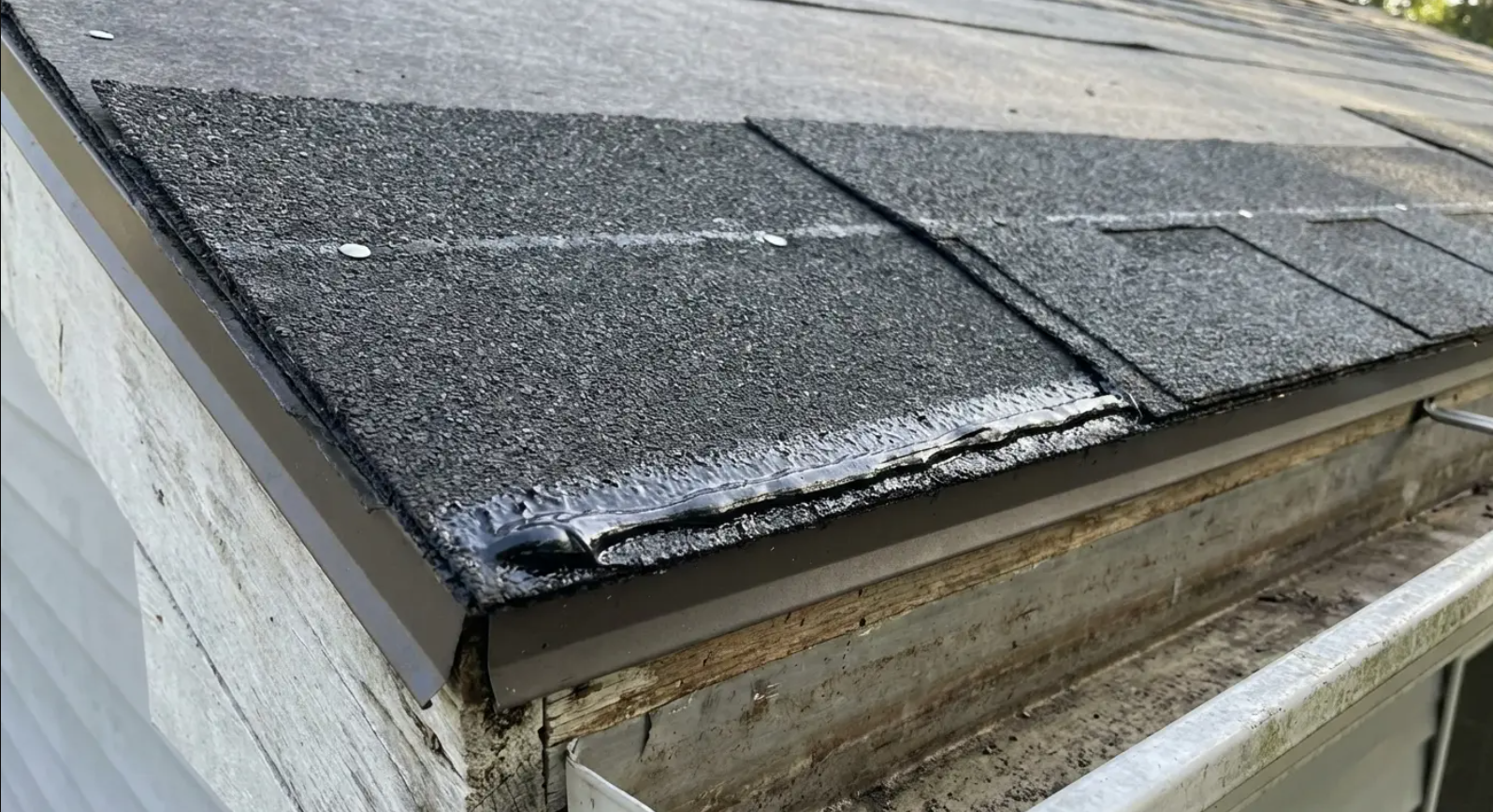
We install a metal flange on the edge of the roof deck called a drip edge. It kicks water away from the fascia and into the gutter. Without it, water curls back under the shingles and rots the wood edge. It's a small piece of metal that saves a lot of headaches.

The Joyland Roofing Approach
A roof is a complex ecosystem of lumber, chemistry, and physics. Neglecting one component causes the whole system to fail. We see this happen all the time when roofers focus only on the shingles. At Joyland Roofing, we engineer a complete system tailored to your specific home. We calculate the airflow, inspect the decking, and ensure every layer works together. You get a roof that performs as beautifully as it looks. When all the essential parts of a roof function in harmony, your home stays protected for decades.
Ask Your Roofer Checklist:
Before hiring anyone, make sure they aren't cutting corners:
- [ ] Will you inspect the decking for rot before installing the underlayment?
- [ ] Do you use synthetic underlayment or old-school felt?
- [ ] Will you install a proper starter strip on eaves and rakes?
- [ ] How will you calculate the ventilation numbers for my specific attic size?
- [ ] Do you use new step flashing or are you reusing the old stuff?
Final Thoughts
Now you know that what sits above your head is way more than just a layer of asphalt. It is a structural, waterproof, breathable system designed to protect your biggest investment. Knowing how these parts work helps you make better decisions when it is time to repair or replace. We believe an educated homeowner is our best customer.
Whether it's a modern suburban home or a historic building, the principles are the same. Even complex projects, like the historic Con Roy building where crews had to crane-lift heavy equipment over delicate terra cotta tiles, rely on a solid structure. If you can identify the parts of your roof, you can spot issues before they become disasters. If you're looking at your roof and wondering if one of these systems is failing, we are here to help. Remember, the parts of a roof must work together, or they won't work at all.